
~ PENTAROUND~
Student Living in Circular Rhythm
Concept
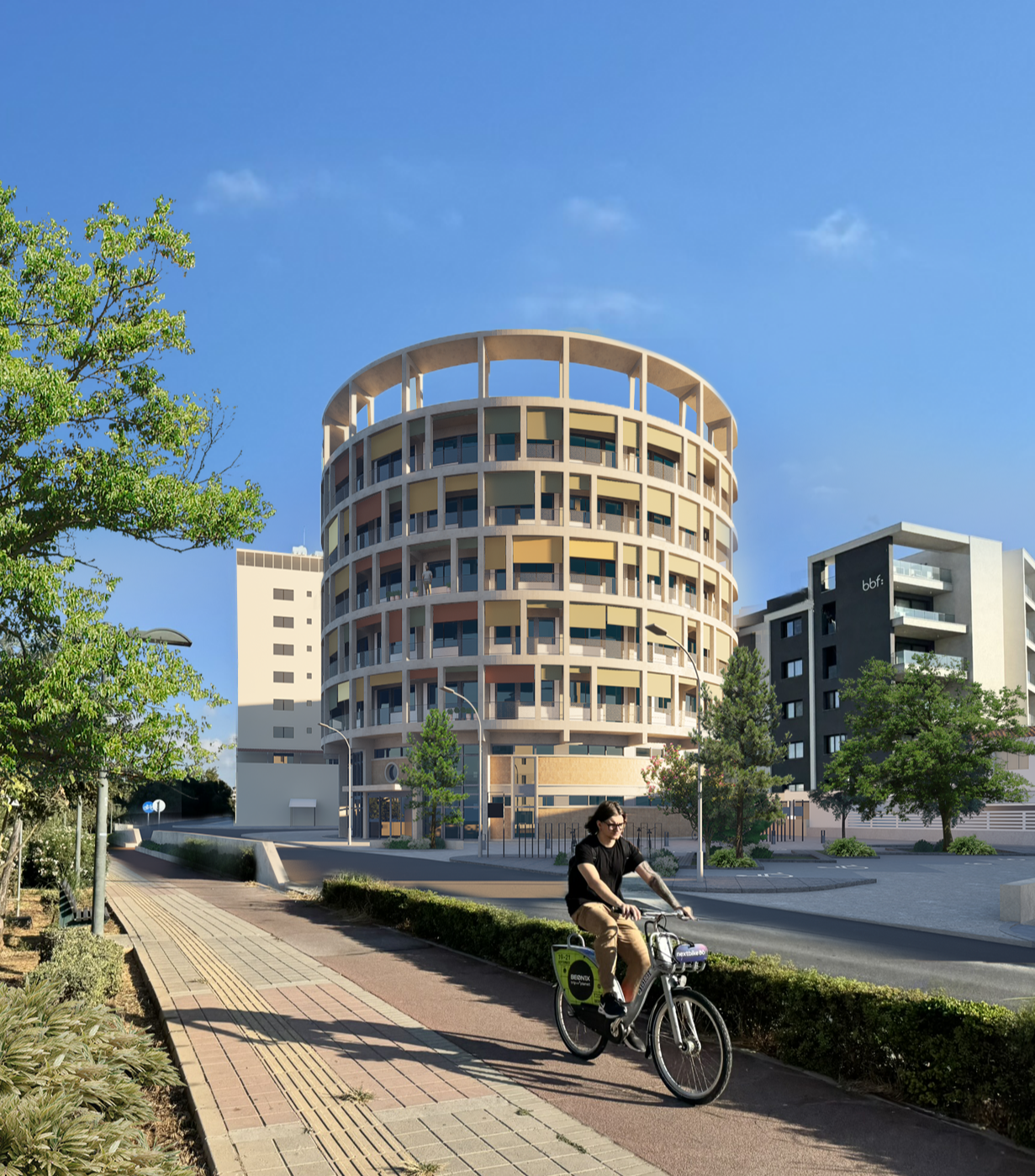
The clarity of the structure, geometric precision and honesty of materials form the foundation of the design proposal. The proposal aims at reducing both construction cost and the building’s energy footprint — a conscious design decision applied at multiple levels.
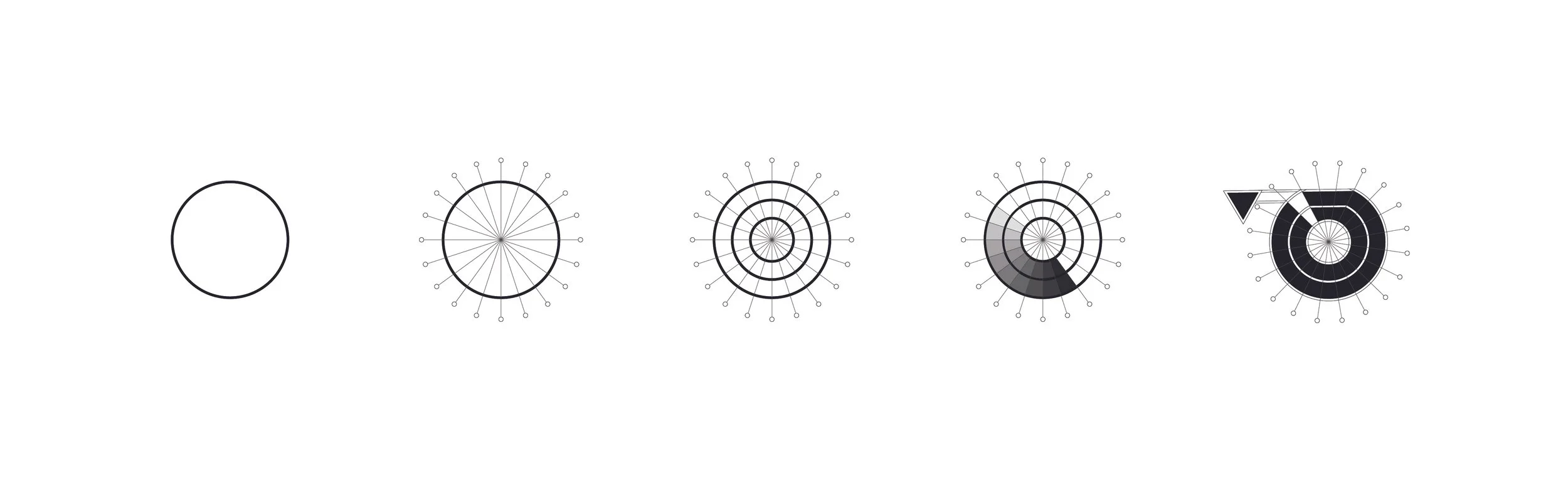
The circle is selected as the optimal shape in terms of area-to-perimeter ratio to guide the design exploration. It is chosen as the starting geometric form to lead to lower construction costs.
The axes of symmetry inherent in the circle allow for variability and adaptability in design, enabling the determination of dimensions and spatial subdivision in response to the given site constraints and requirements.
The standardisation of the building programme lends itself to the use of prefabricated elements, contributing to reducing construction costs.
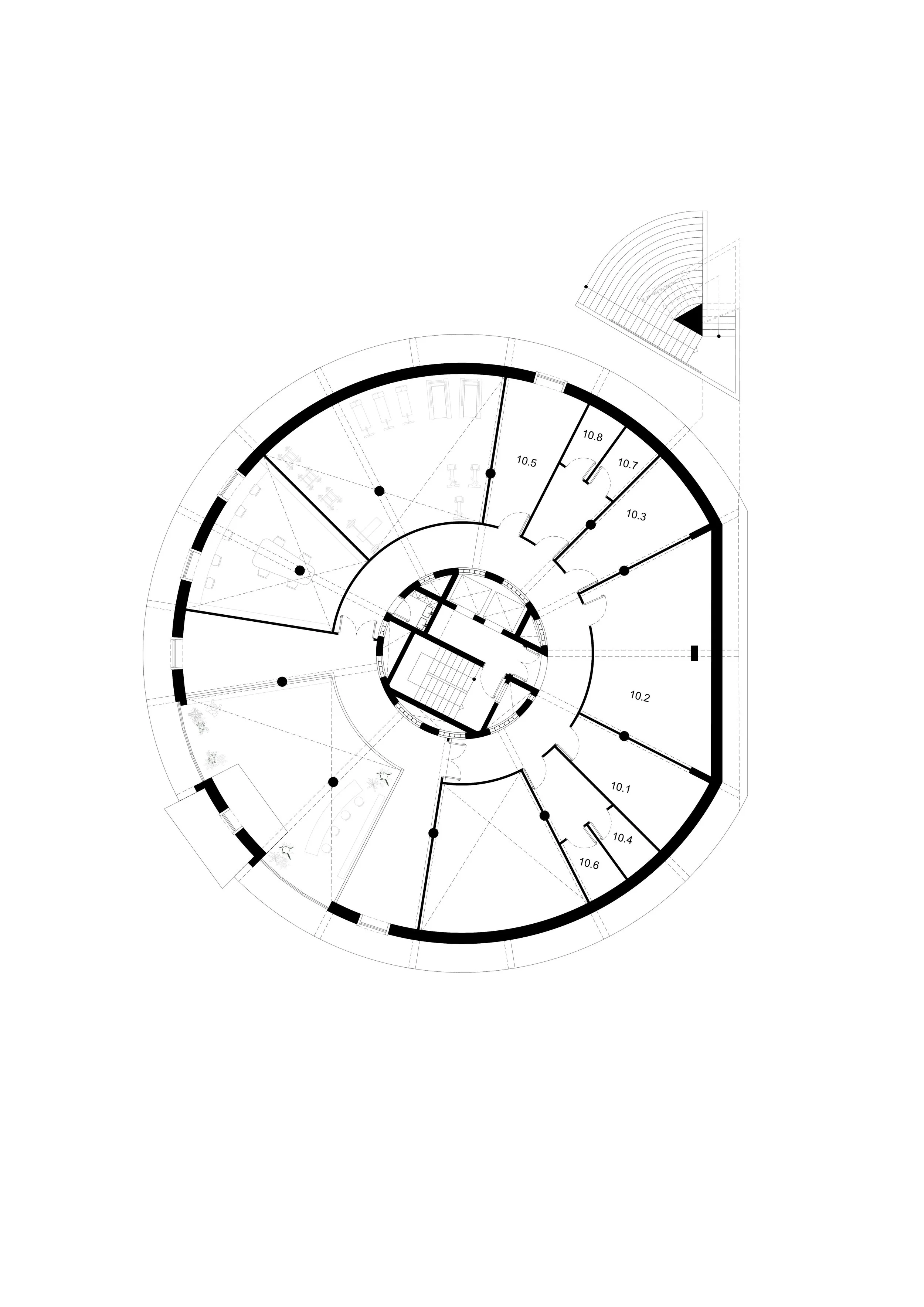
The structural system is based on three concentric circles, bringing form and structure into direct relationship. The regularity of the circle allows for the creation of all prefabricated building components with a minimal number of molds. The method of connection between prefabricated elements is also expressed across most of the building.
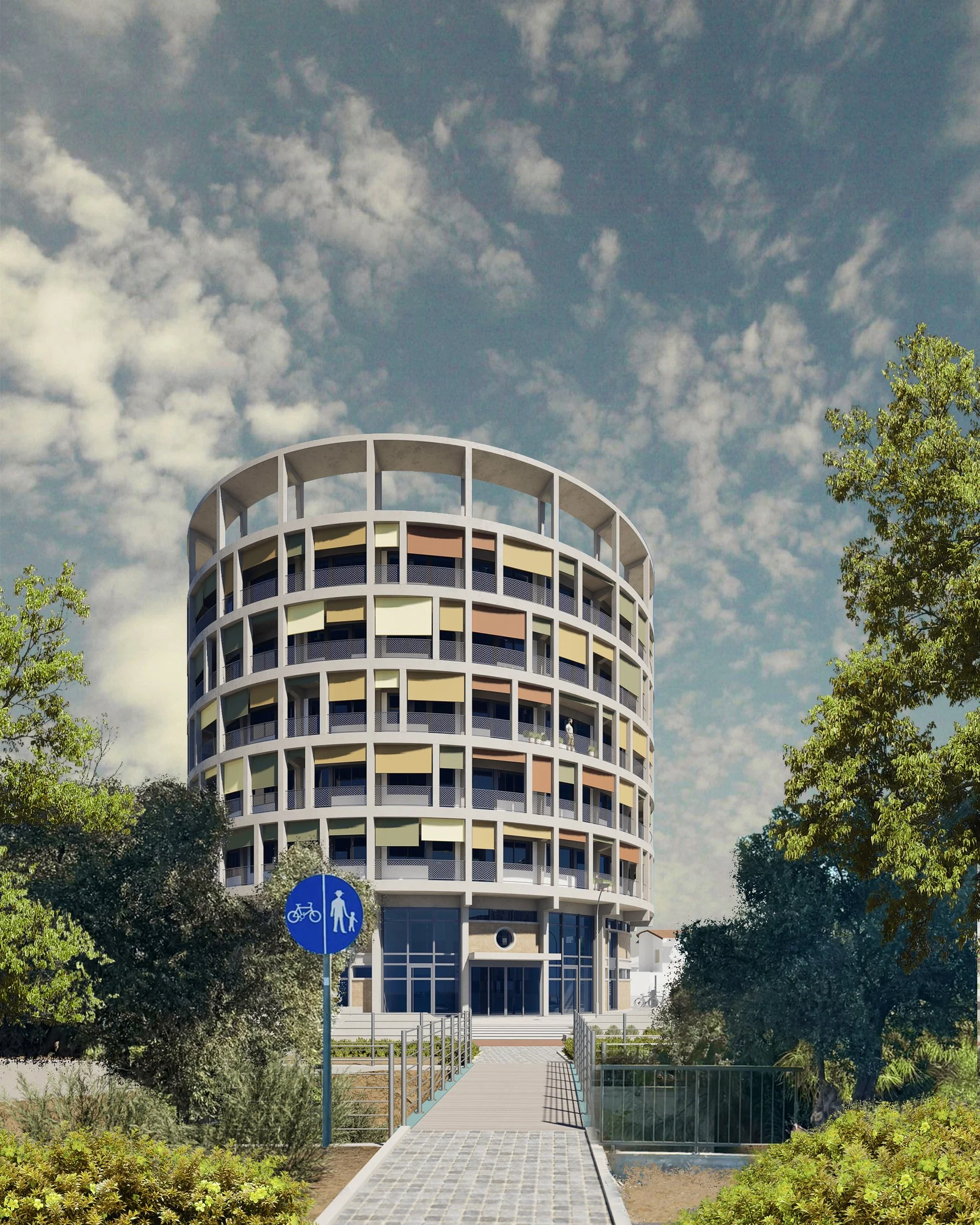
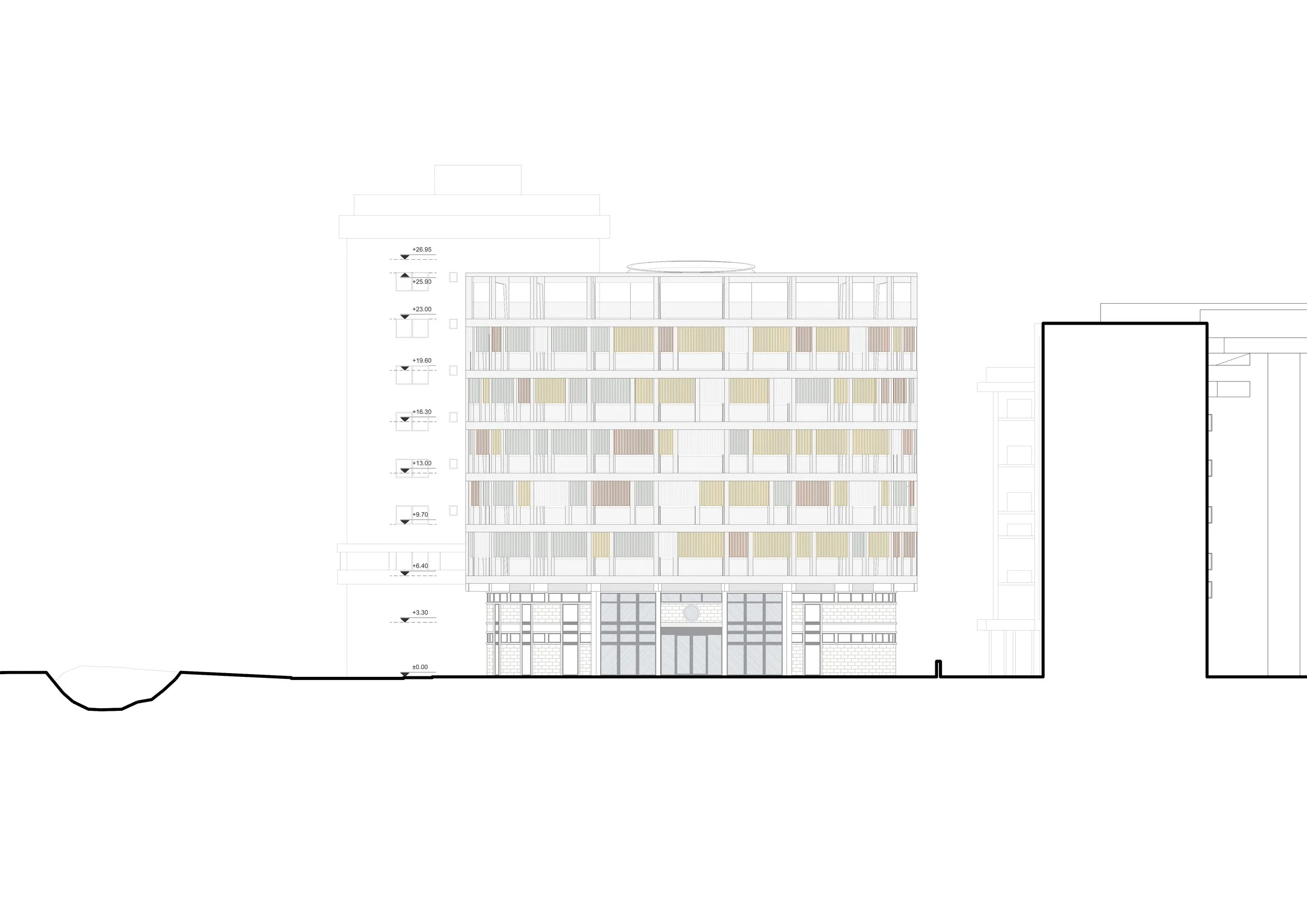
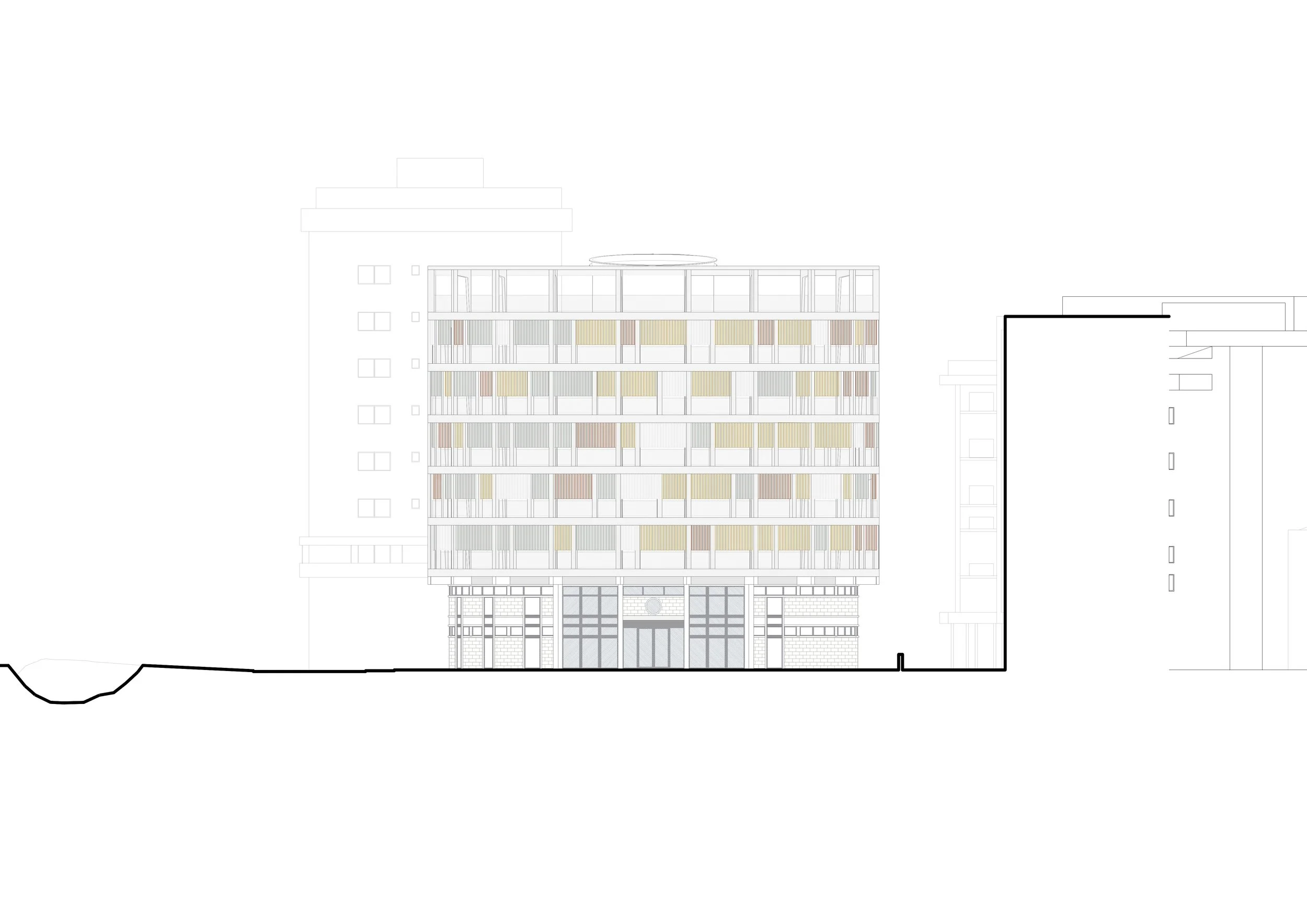
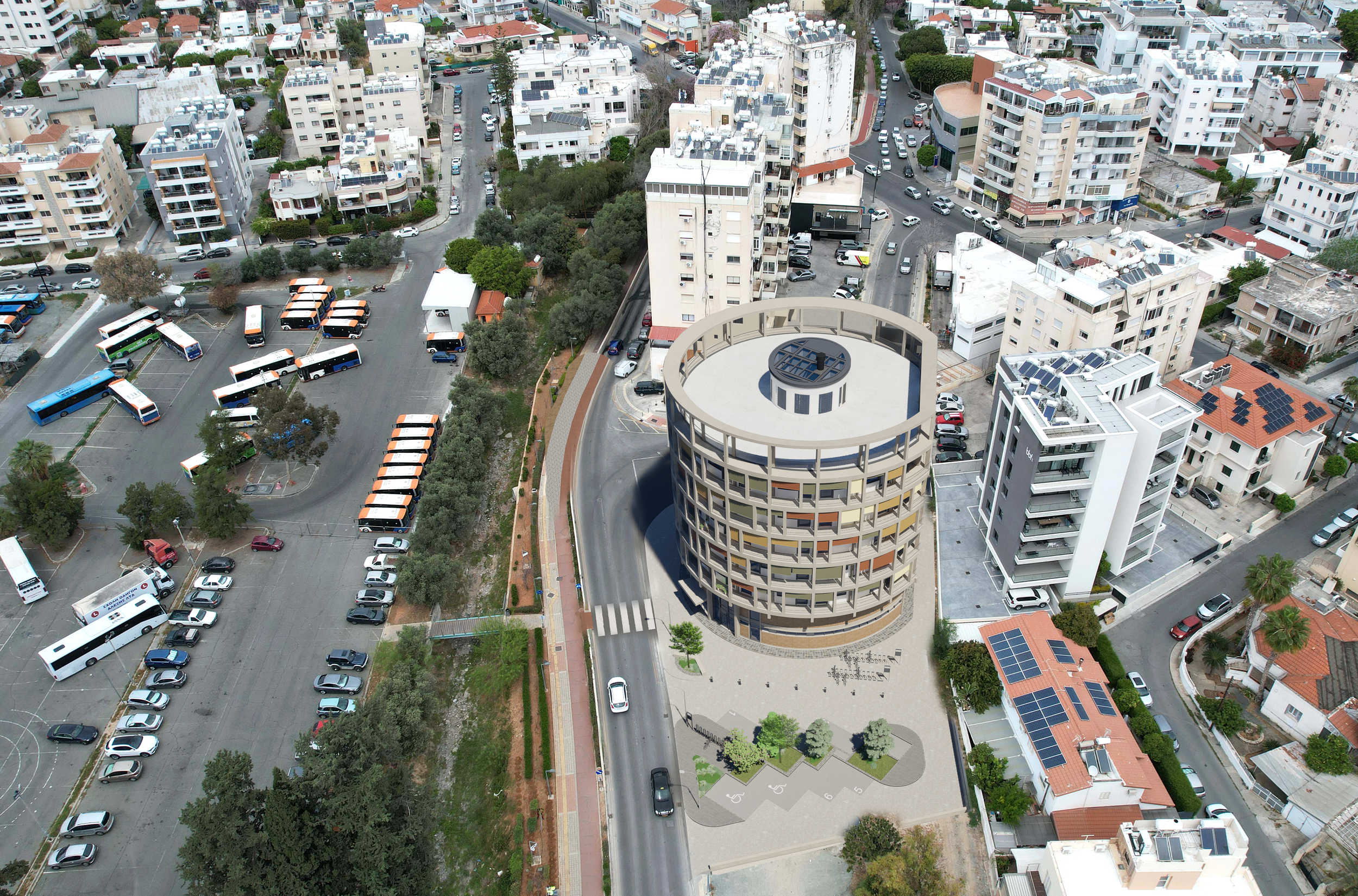
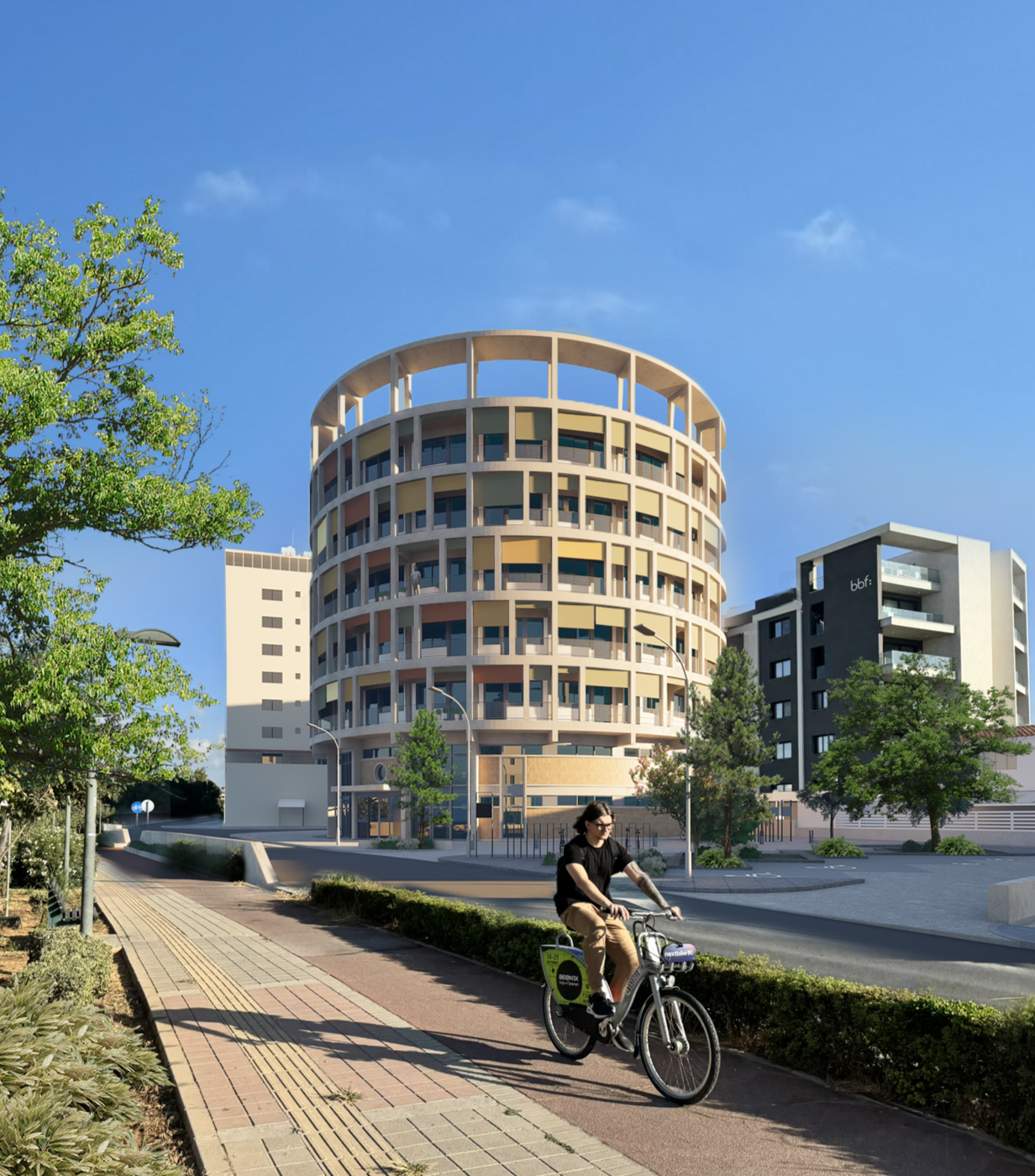
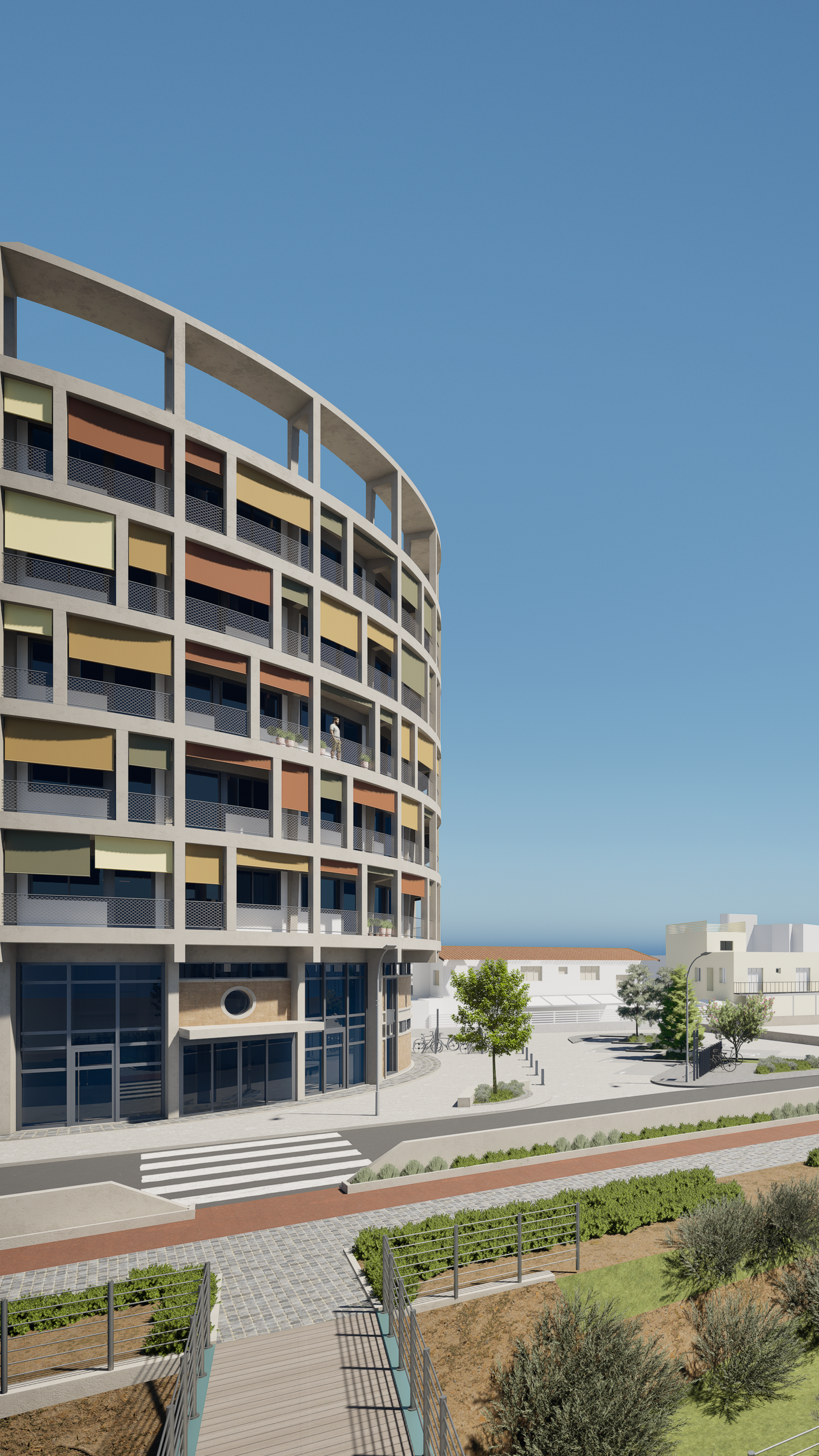
Compositionally, the building follows a tripartite arrangement of base, body, and crown.
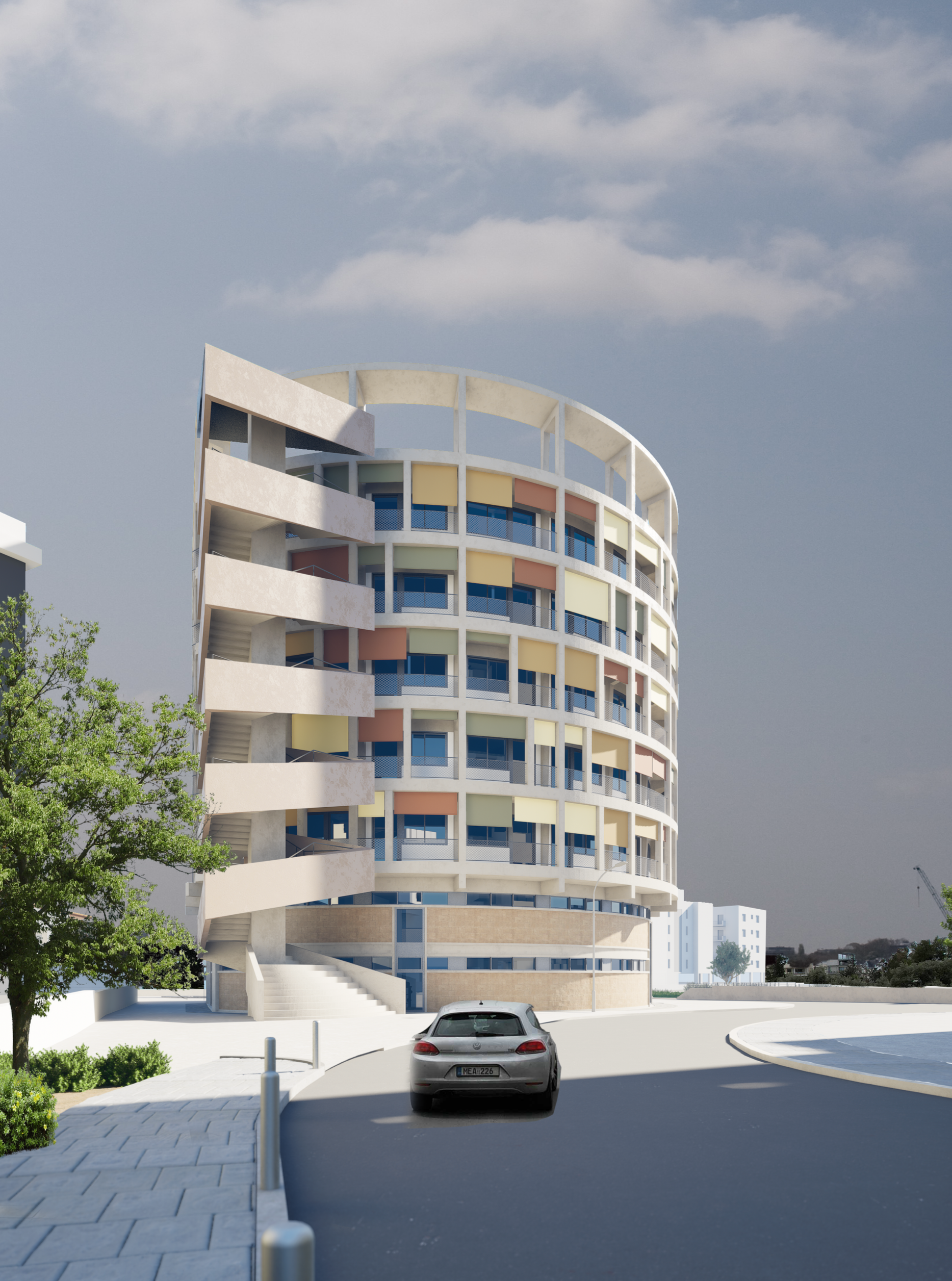
The stone base draws inspiration from the adjacent stream, “protecting the interior”. The stone is laid in successive horizontal layers, reinforcing the building’s connection to the landscape. This is further emphasised by the horizontal openings running along the base, visually separating it from the body.
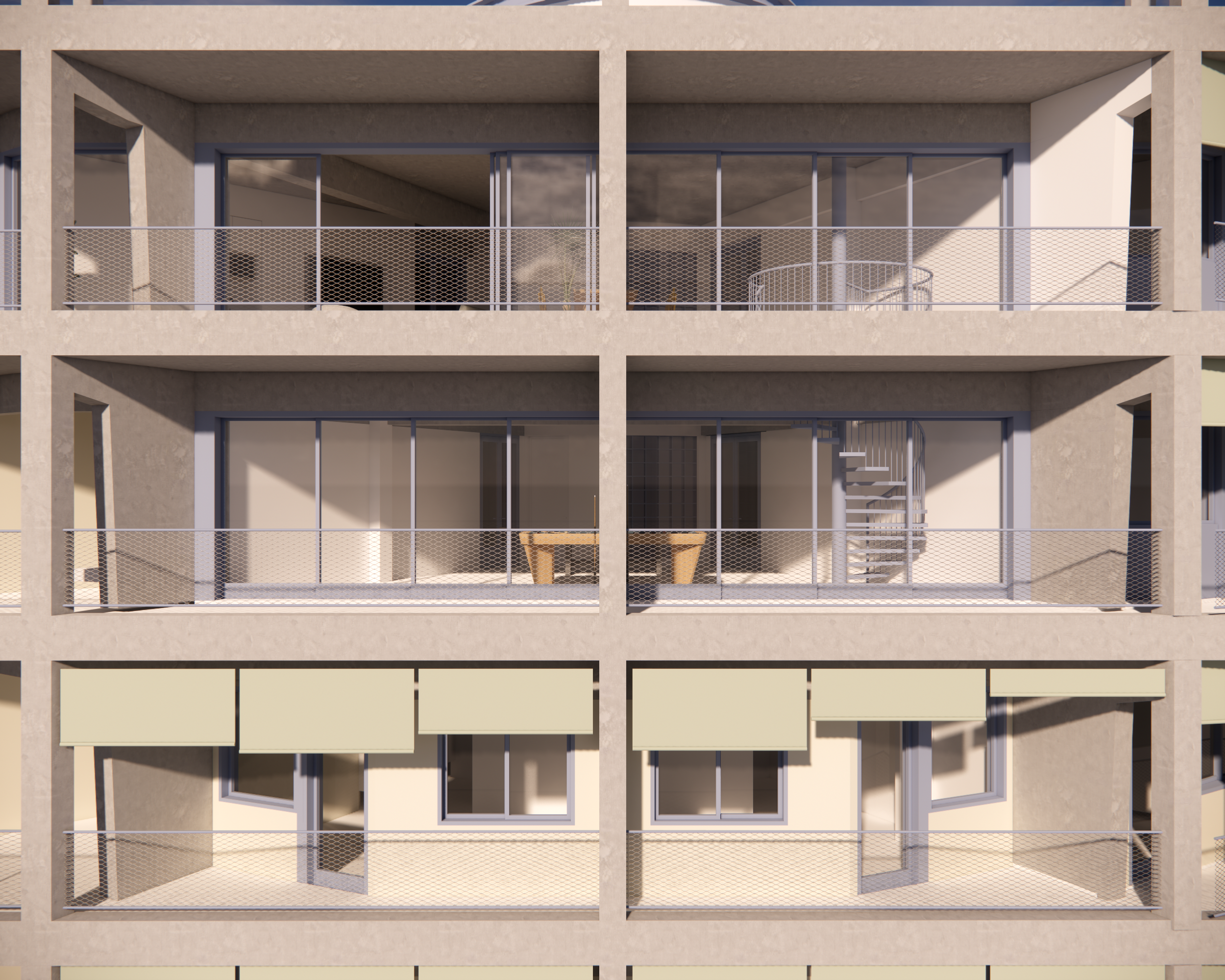
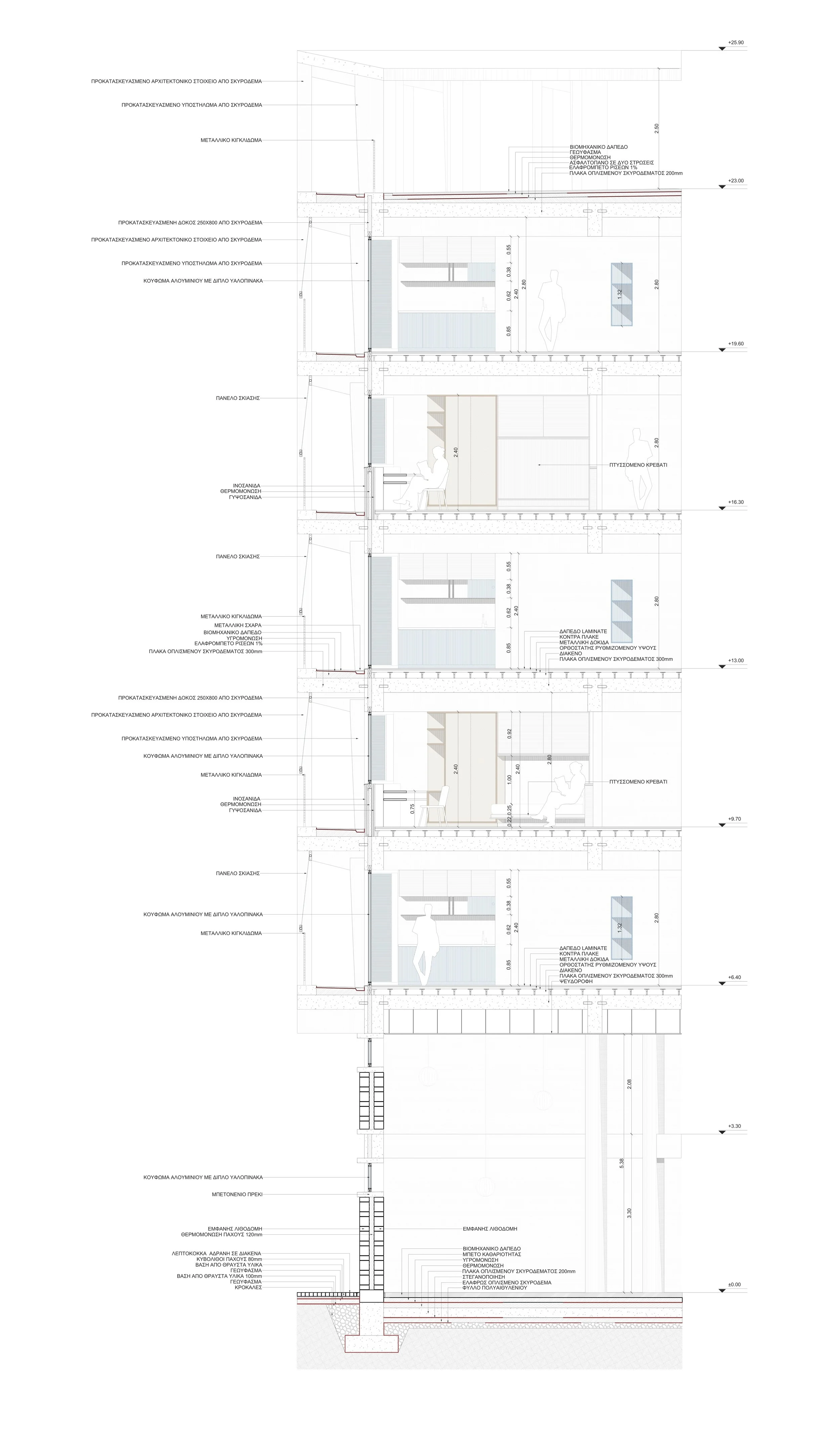
The body houses the student rooms, whose repetition forms the majority of the façade. Here, the vertical axis is highlighted through exposed concrete elements supporting the cantilevers, creating vertical continuities along the column grid.
The crown once again emphasises the horizontal axis. The reinforced-concrete ring serves the sculptural intent of the composition, directing the gaze upward towards the sky.
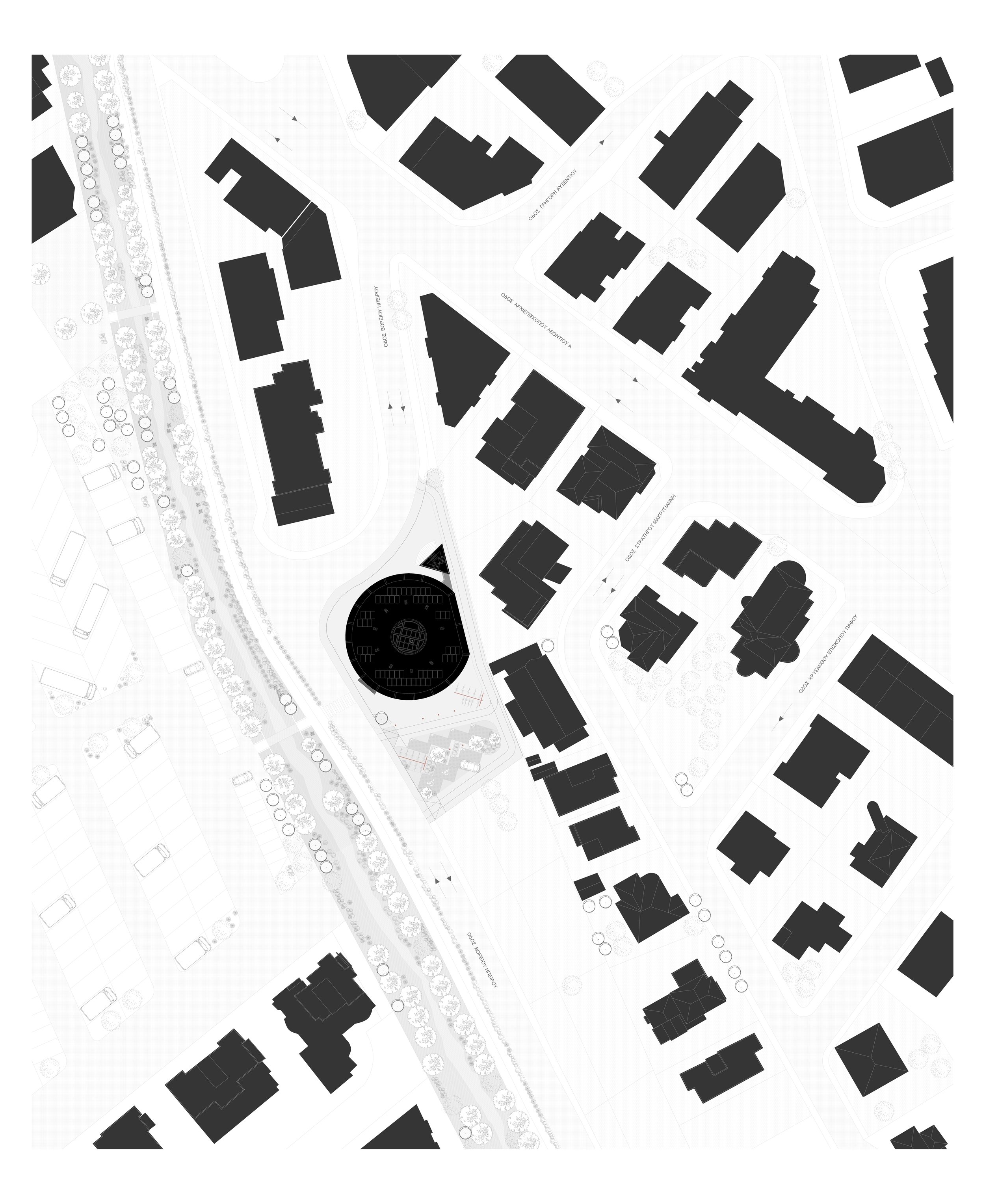
Masterplan
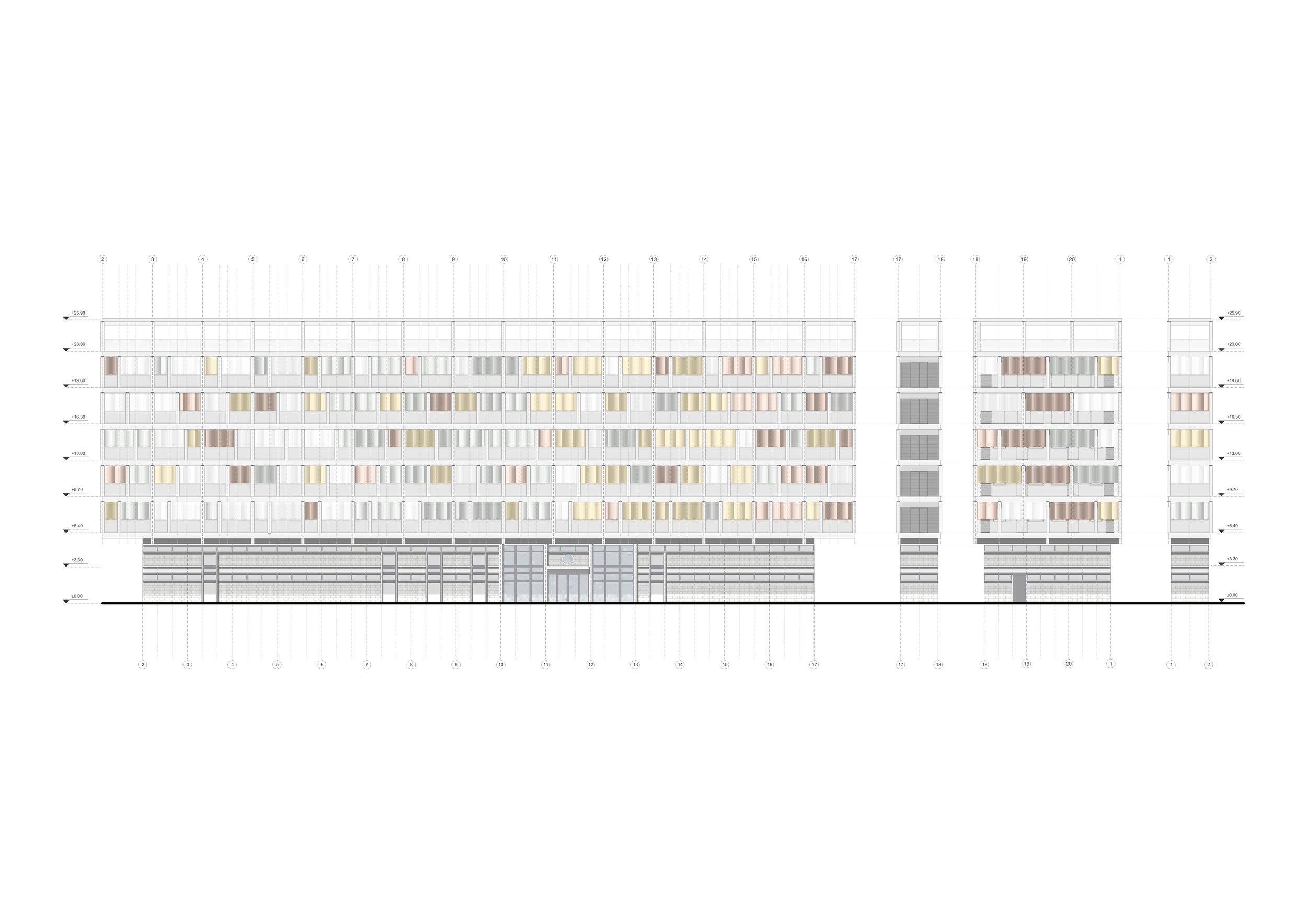
Unrolling the elevation of the cylinder
Second Layer of Interpretation
The structural strictness described above is softened by moments of playful lightness and an ephemeral atmosphere. The floor slabs act as a musical stave, upon which two additional systems—the vertical prefabricated concrete elements and the shading system made of fabric in earthy tones—introduce rhythm and movement.
This approach combines structural expressiveness with atmospheric sensitivity, producing an architecture that is both rational and playful. It is based on systems centred around the human experience: precise in concept yet open to multiple interpretations in use.
The material palette—local limestone, concrete, and off-white plaster—gives the proposal a timeless quality. The colour exploration of the fabric awnings, chosen as a lightweight shading system contrasting with the solidity of concrete, is intentional. It is based on balanced compositions reminiscent of musical ensembles. Their predominantly diagonal arrangements create a sense of motion, especially in combination with the cylindrical form.
Functional Layout
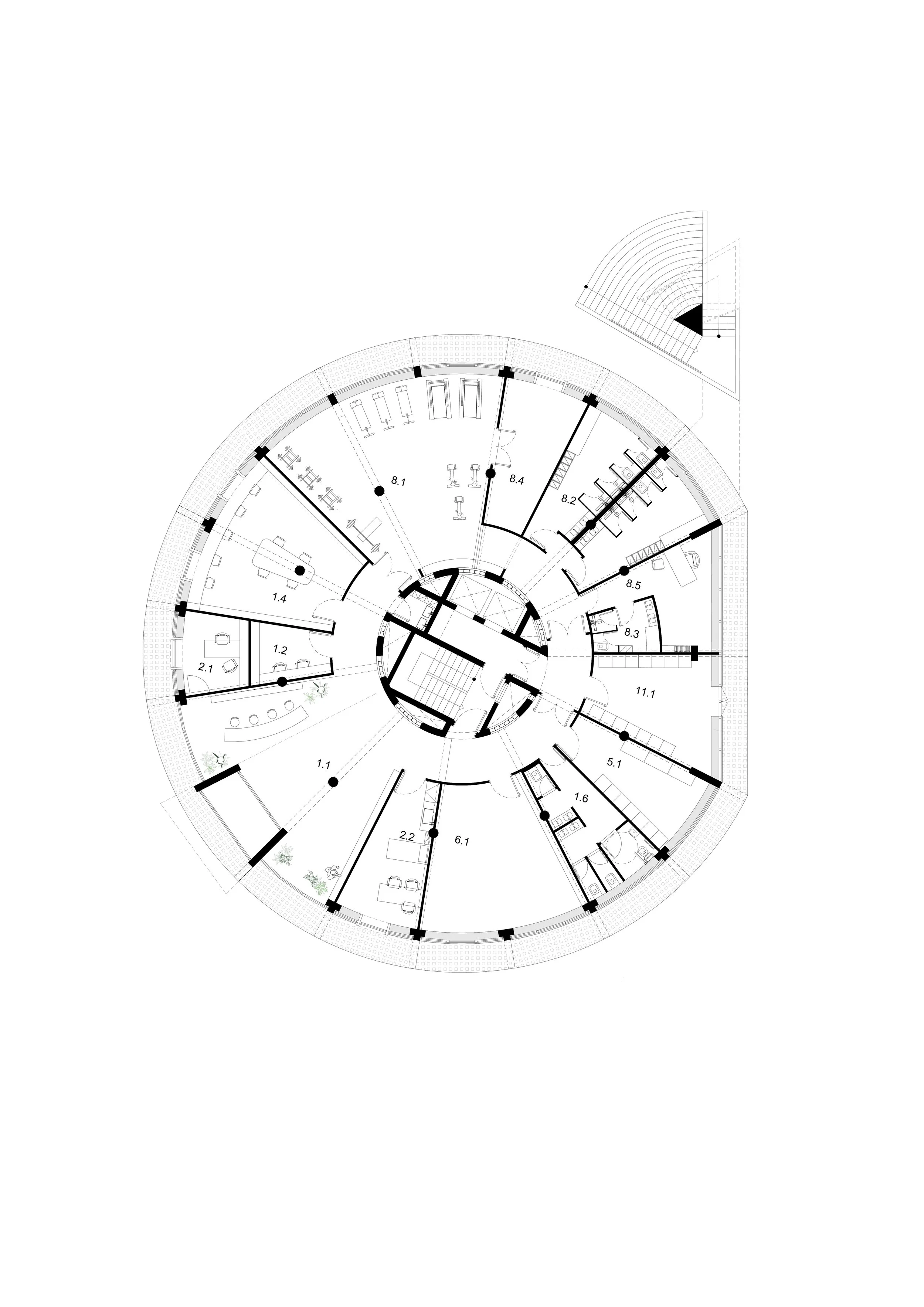
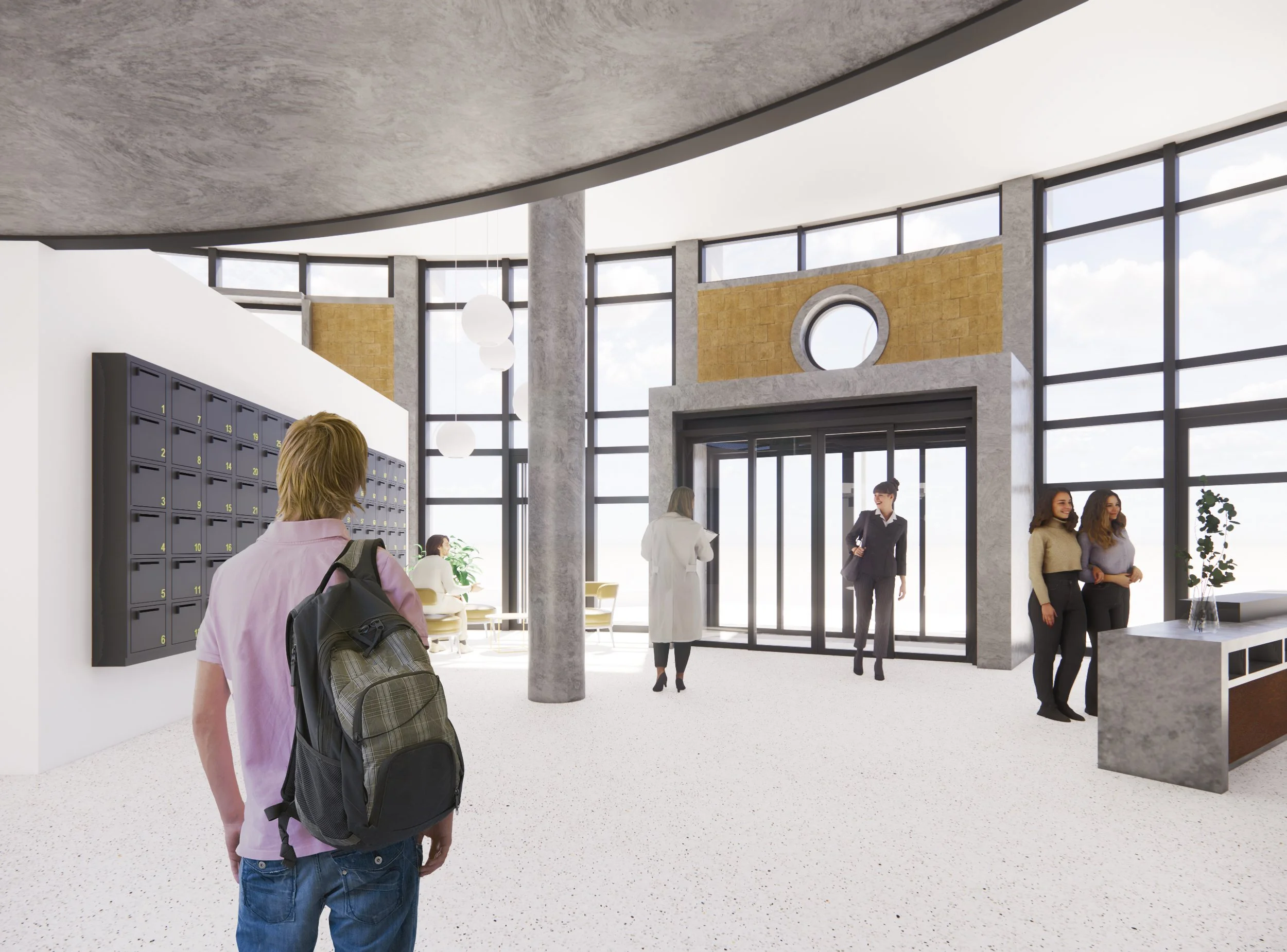
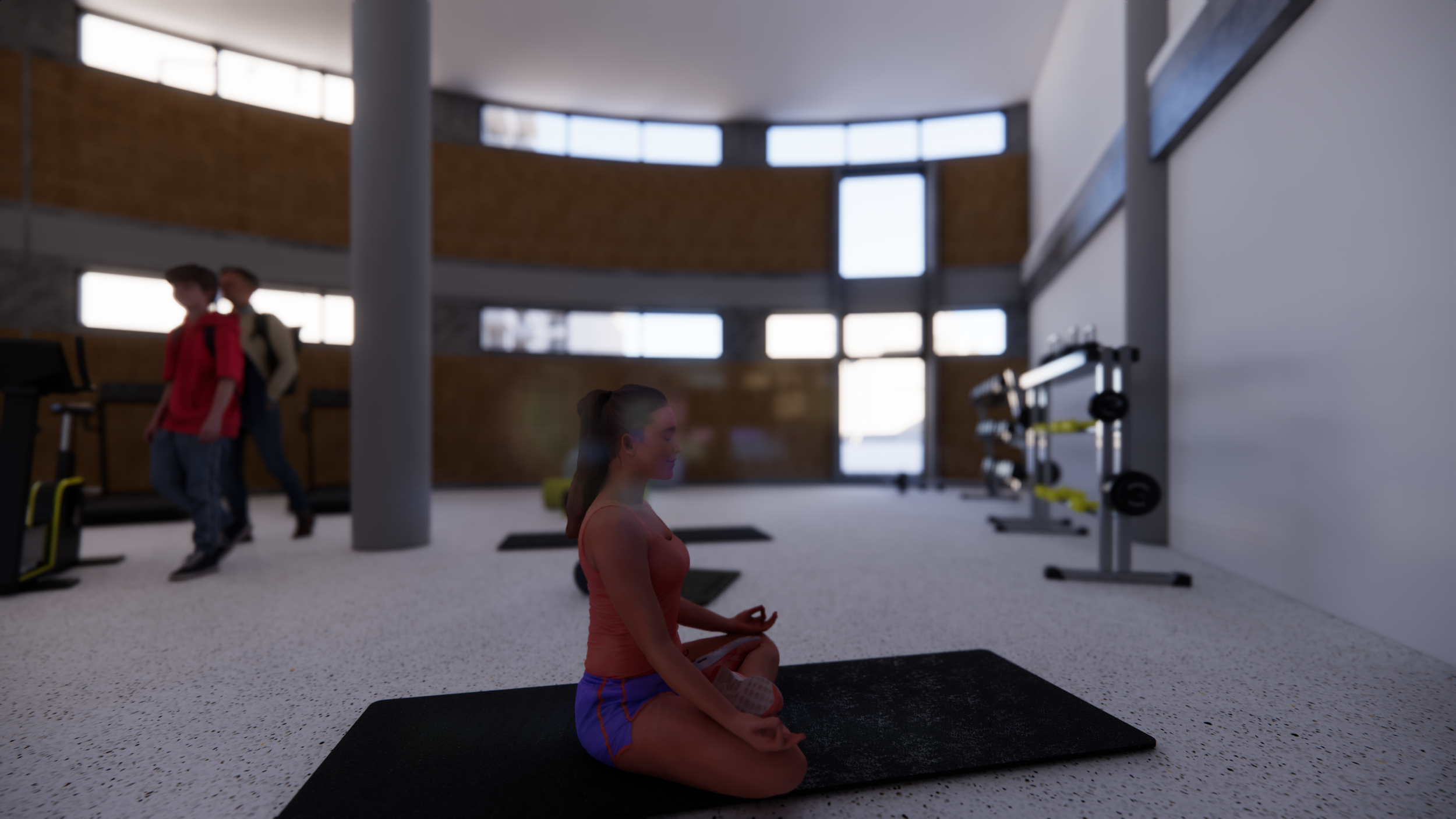
On the ground floor, the gym, study room and reception area are located, benefiting from a mezzanine that creates double-height spaces. All mechanical systems of the building are concentrated in the mezzanine, which receives daylight and ventilation through high clerestory windows along the façades.
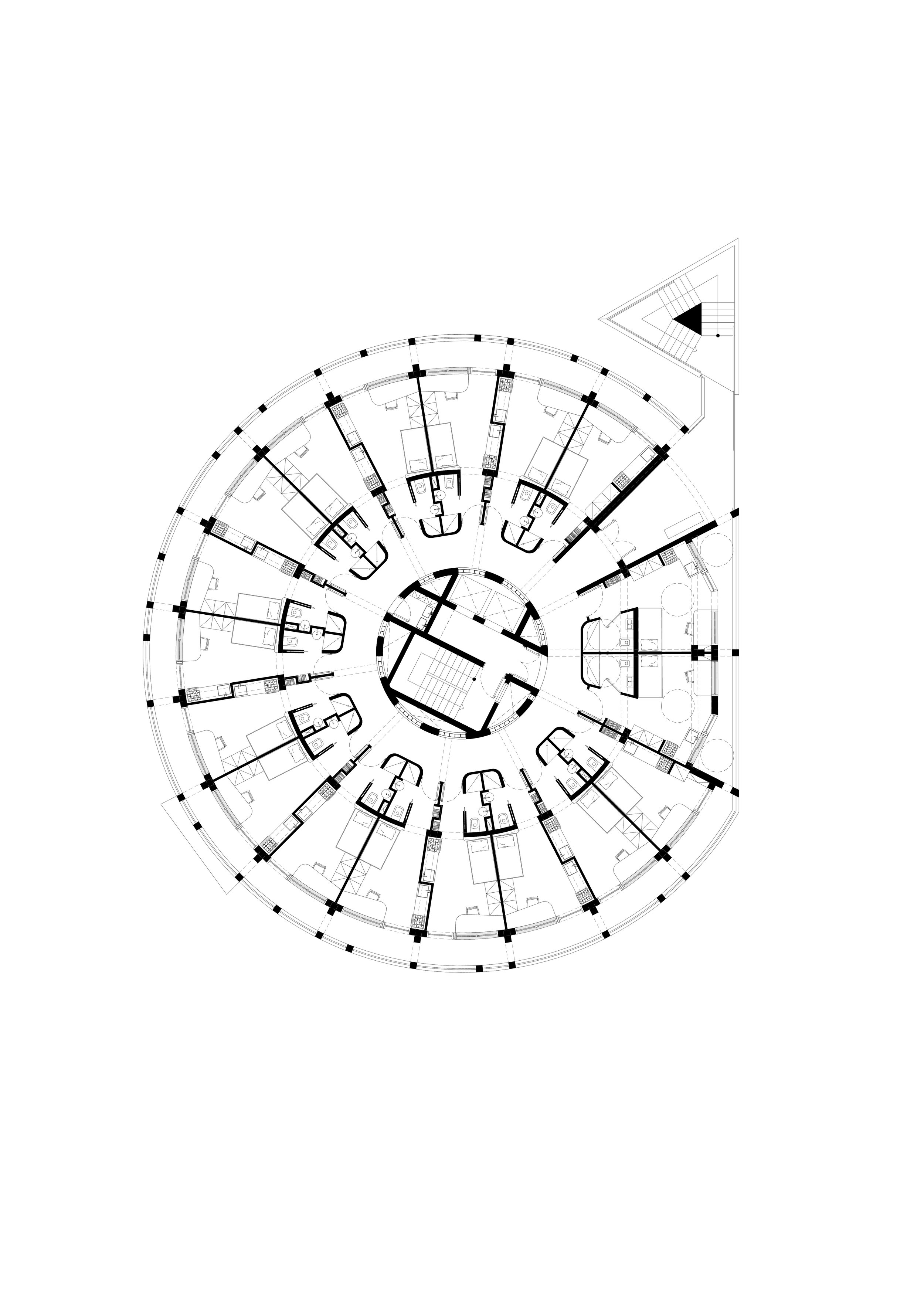
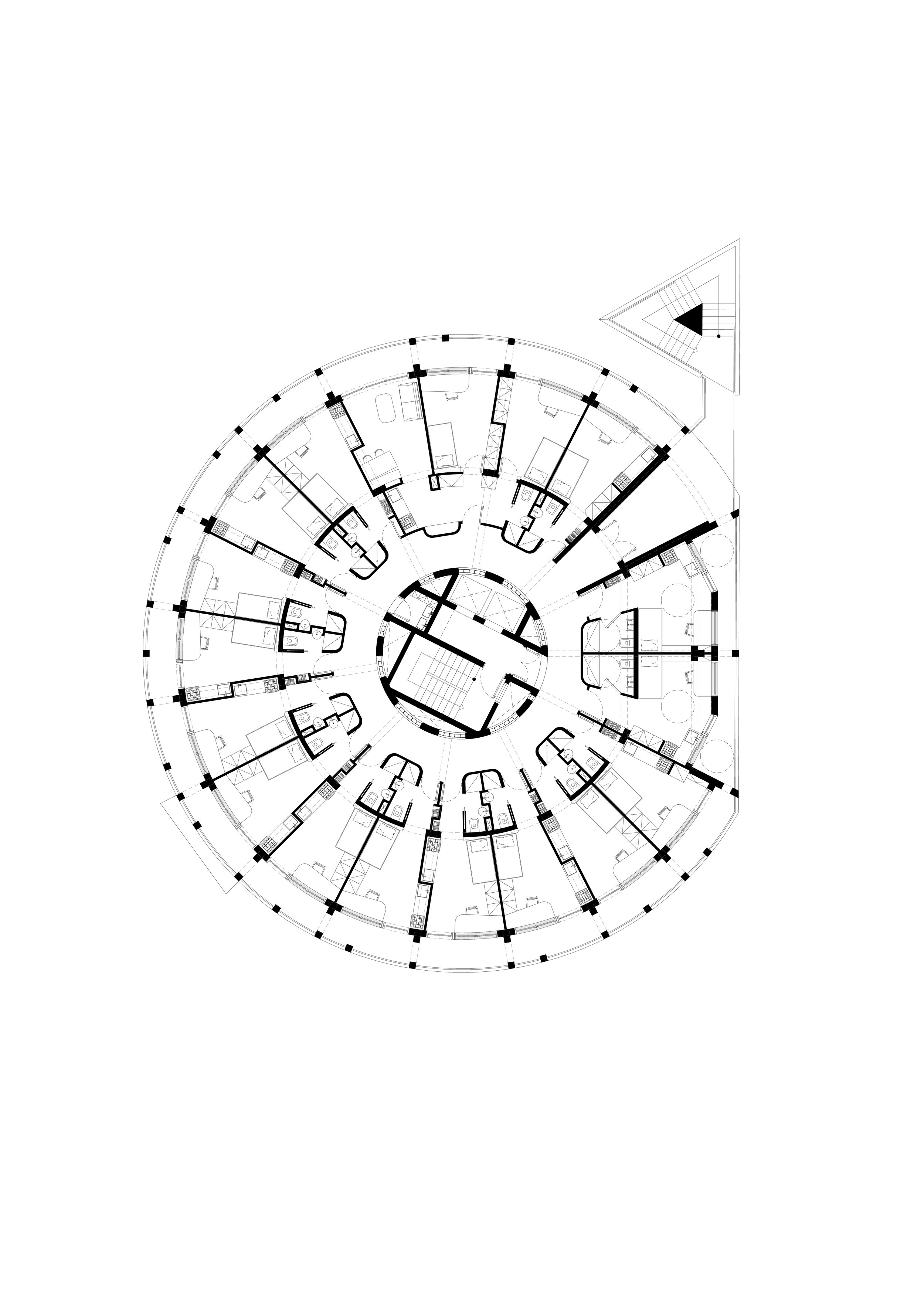
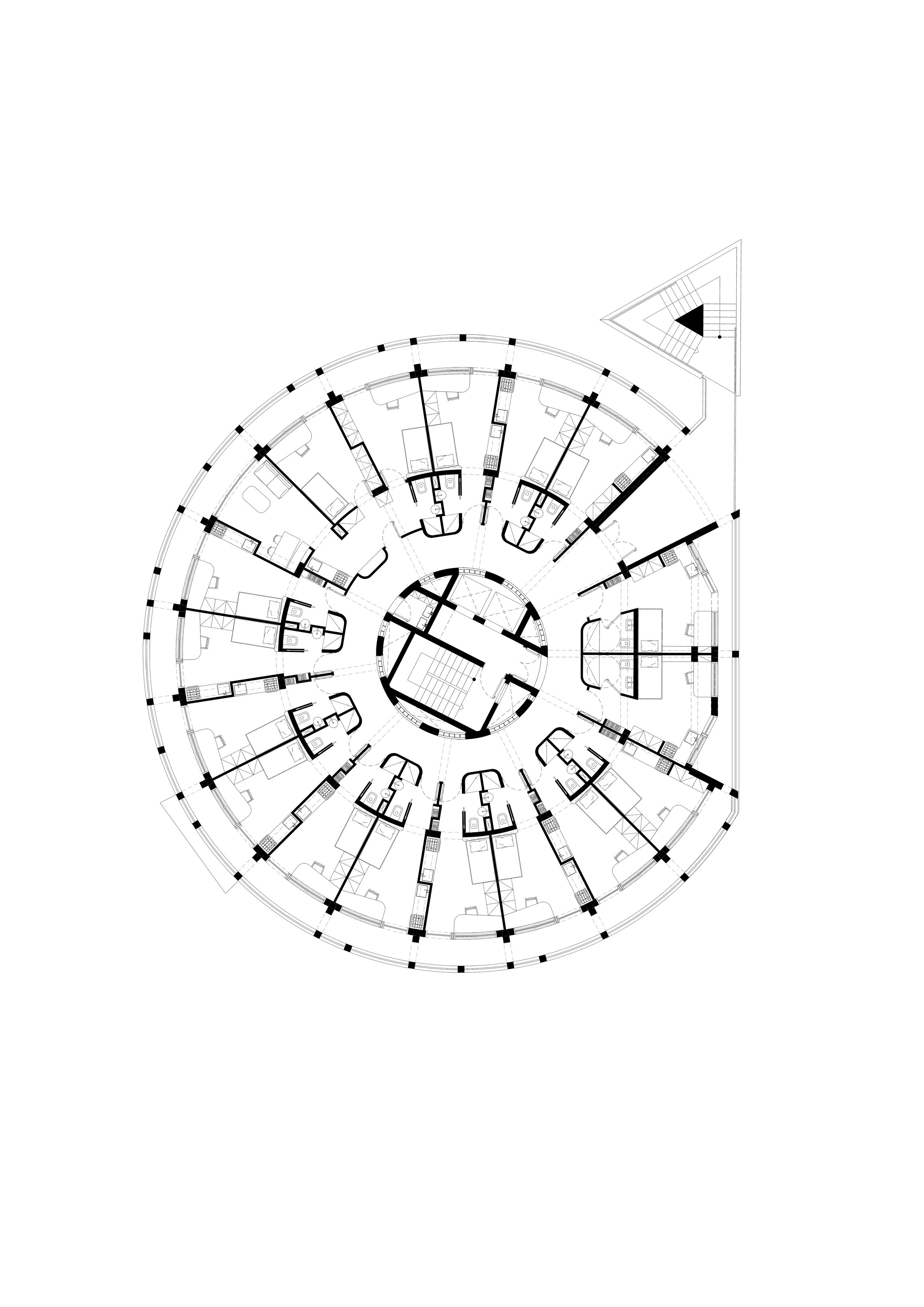
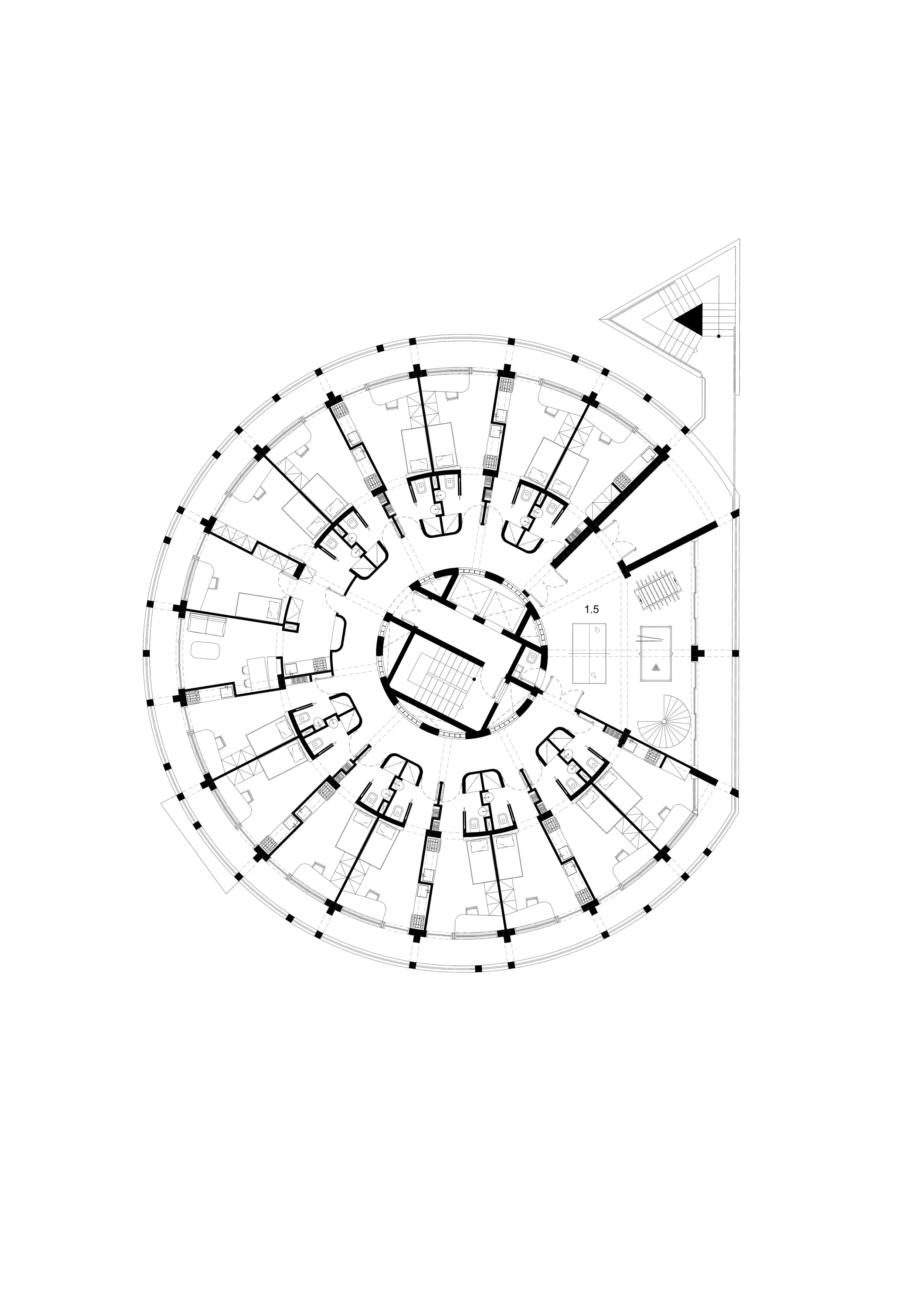
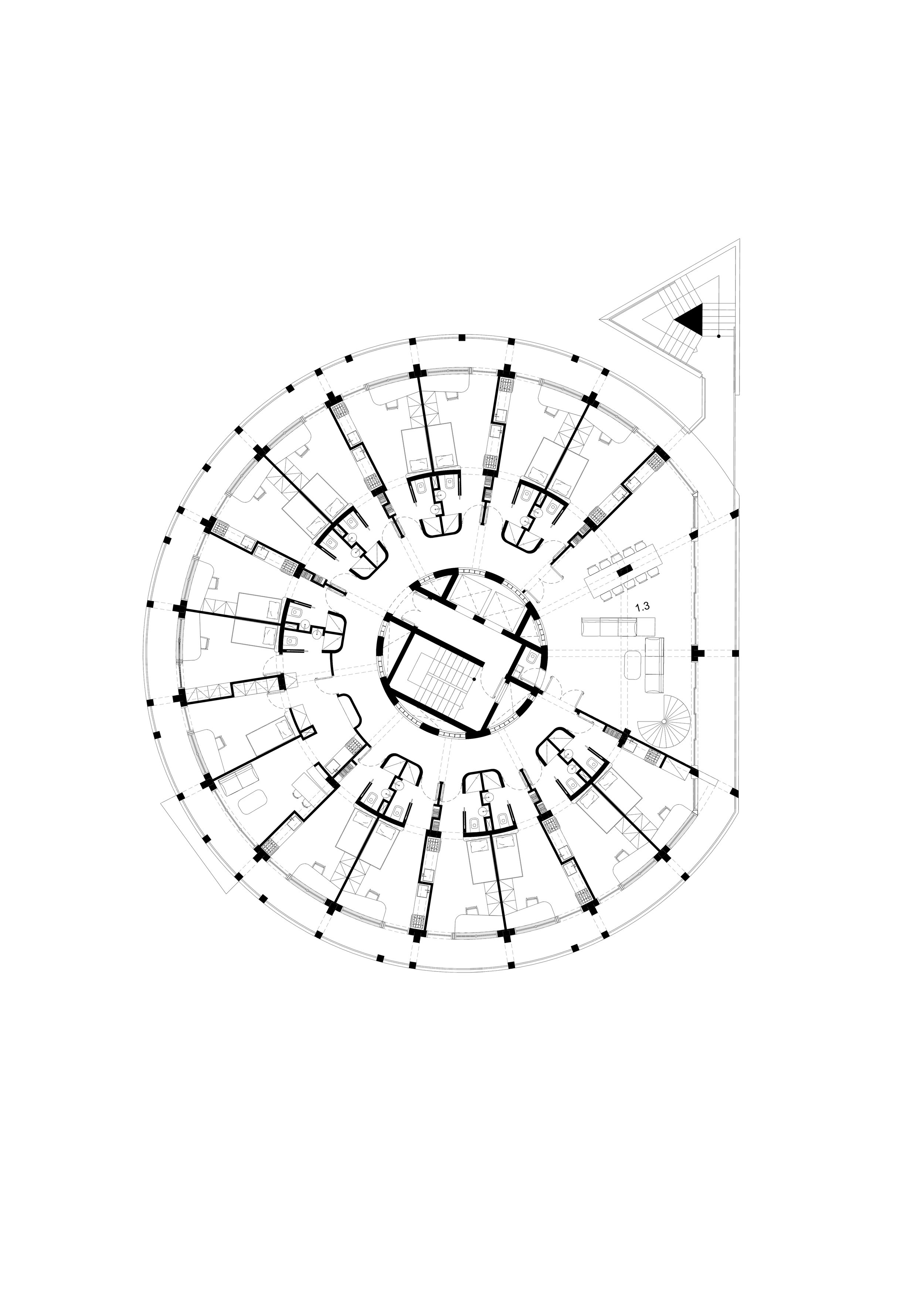
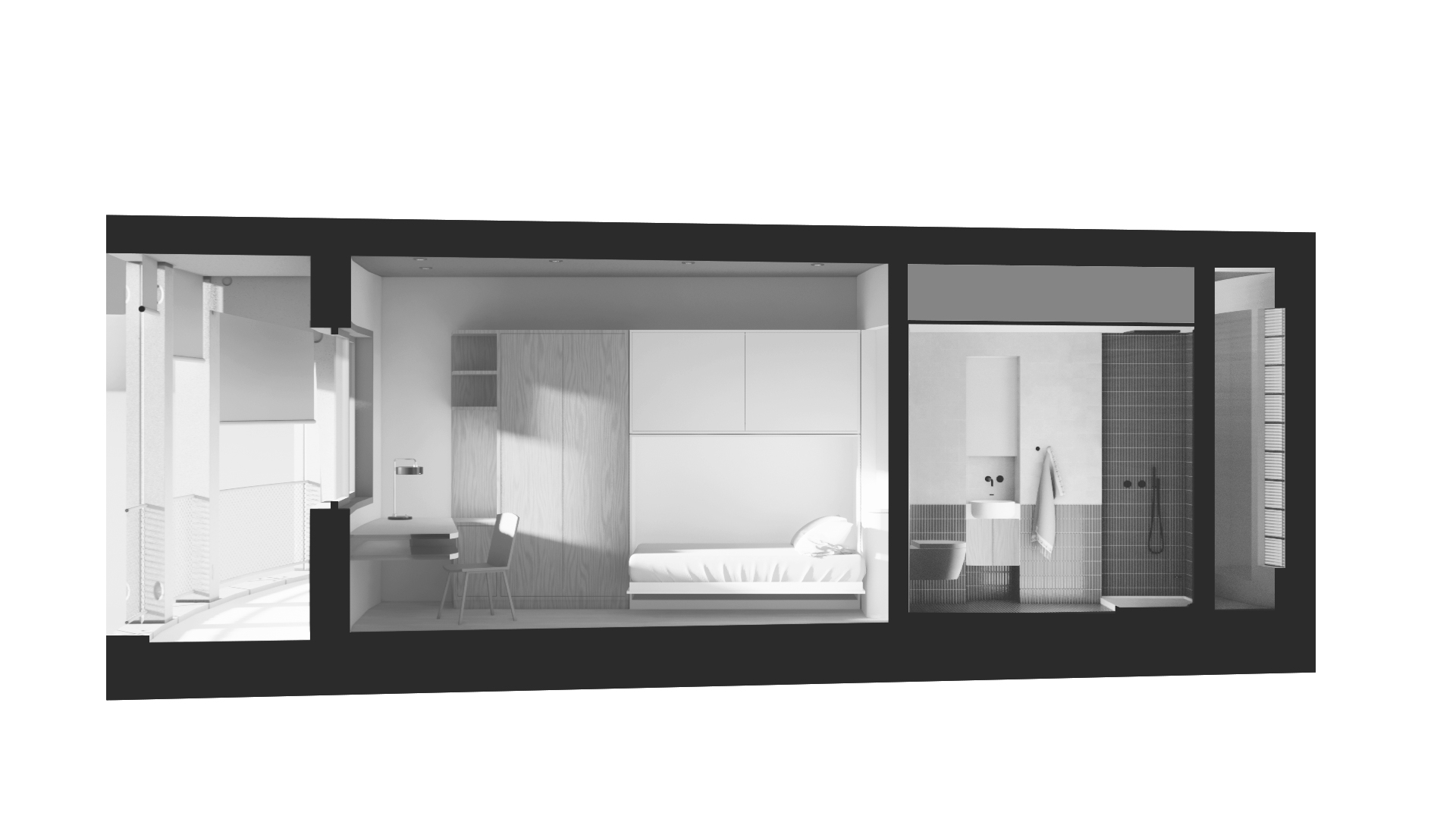
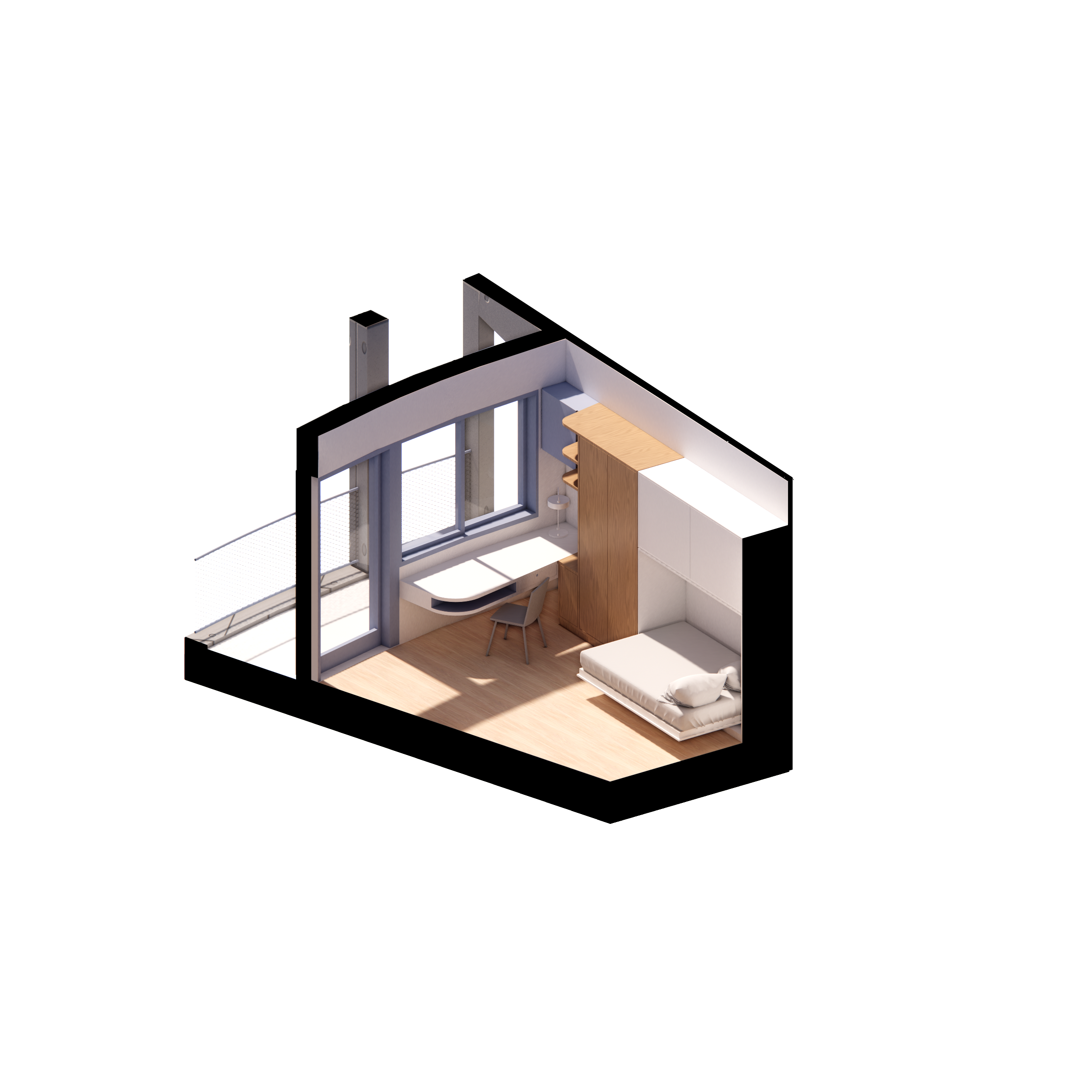
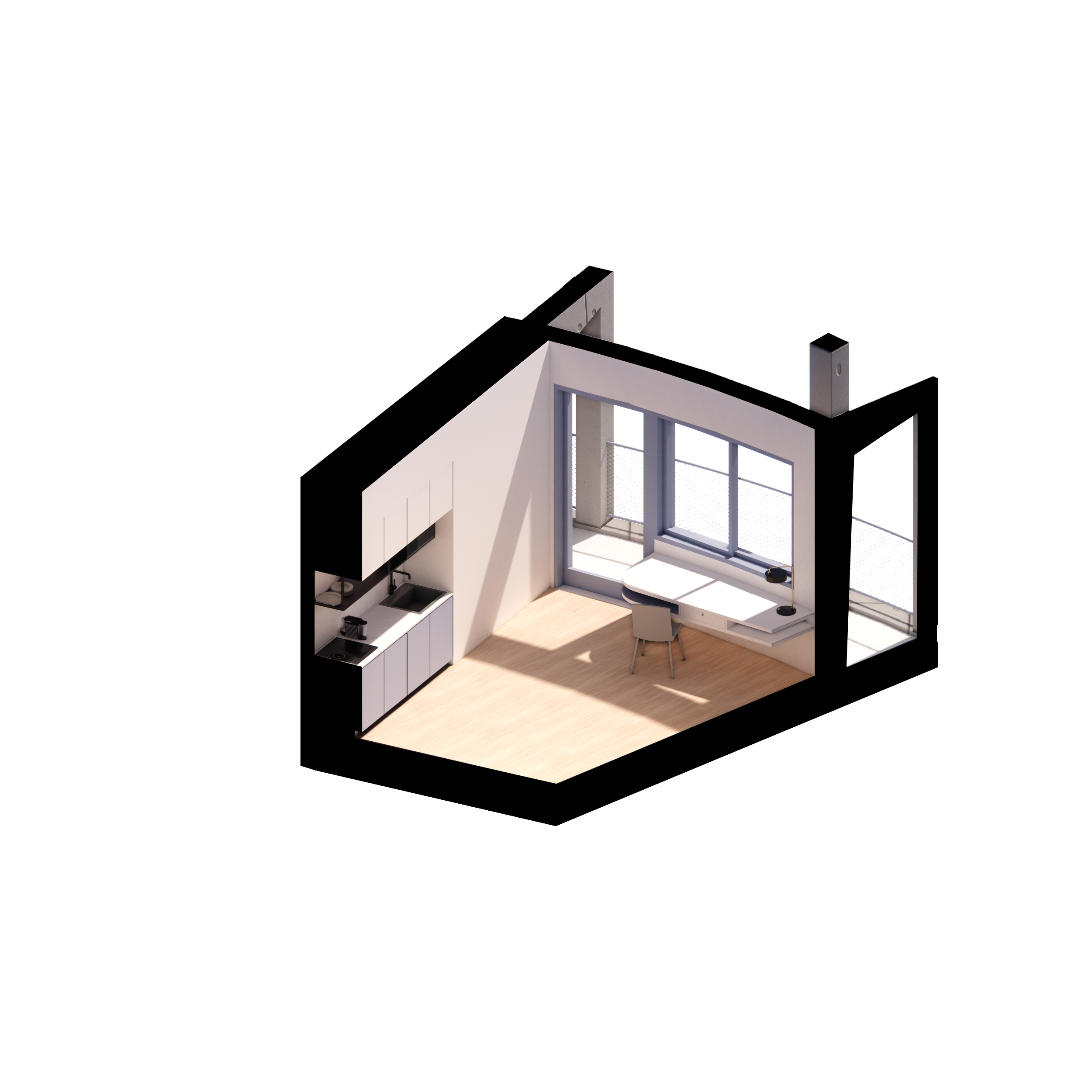
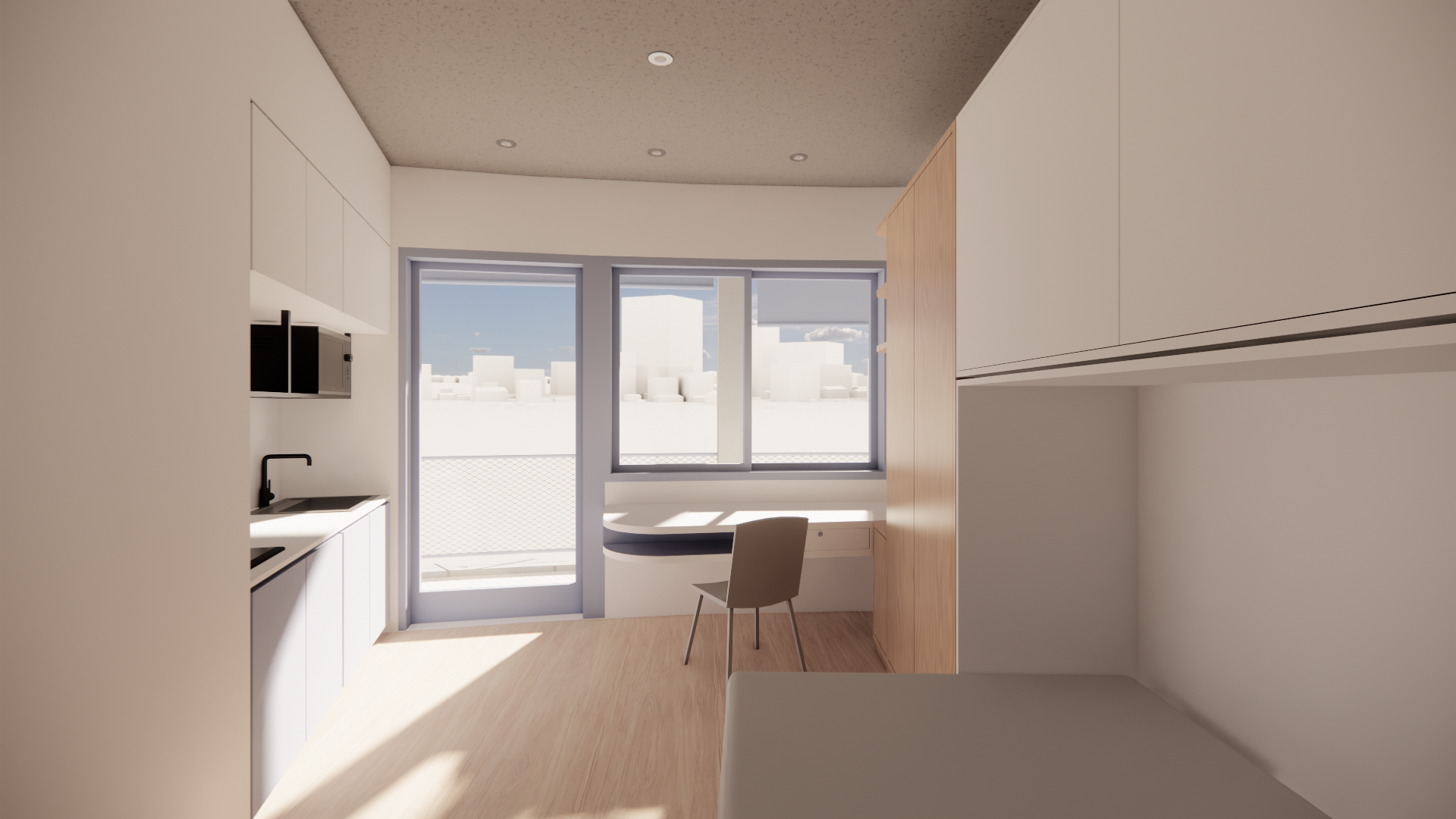
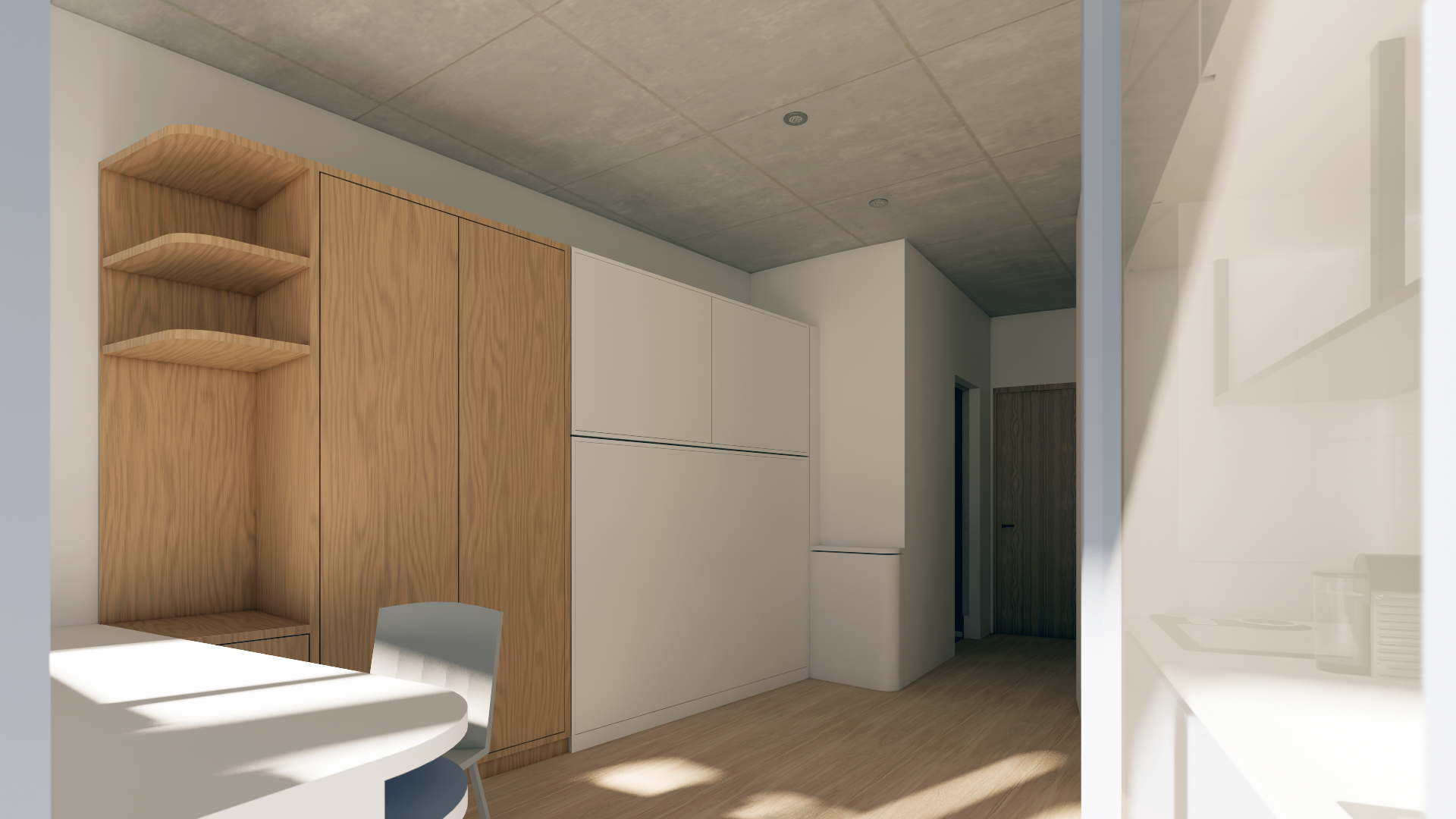
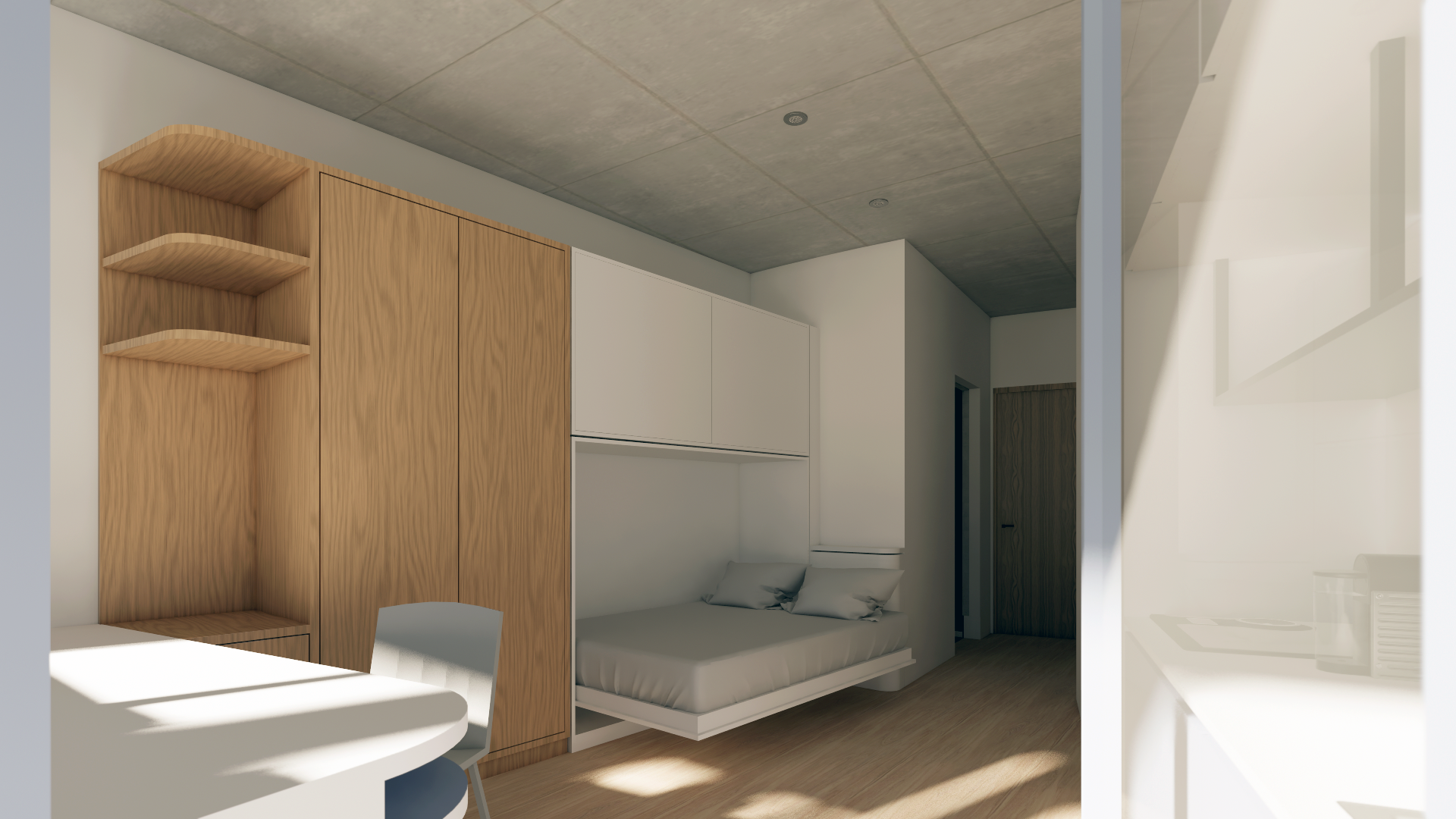
From the 1st to the 5th floor, the student rooms are organised. On the eastern side, where the circular form adjusts to planning regulations and aligns with the rear boundary, accessible rooms (for persons with disabilities) are placed in pairs—two on each floor (six in total). Here, the arc angle is increased to accommodate accessibility needs.
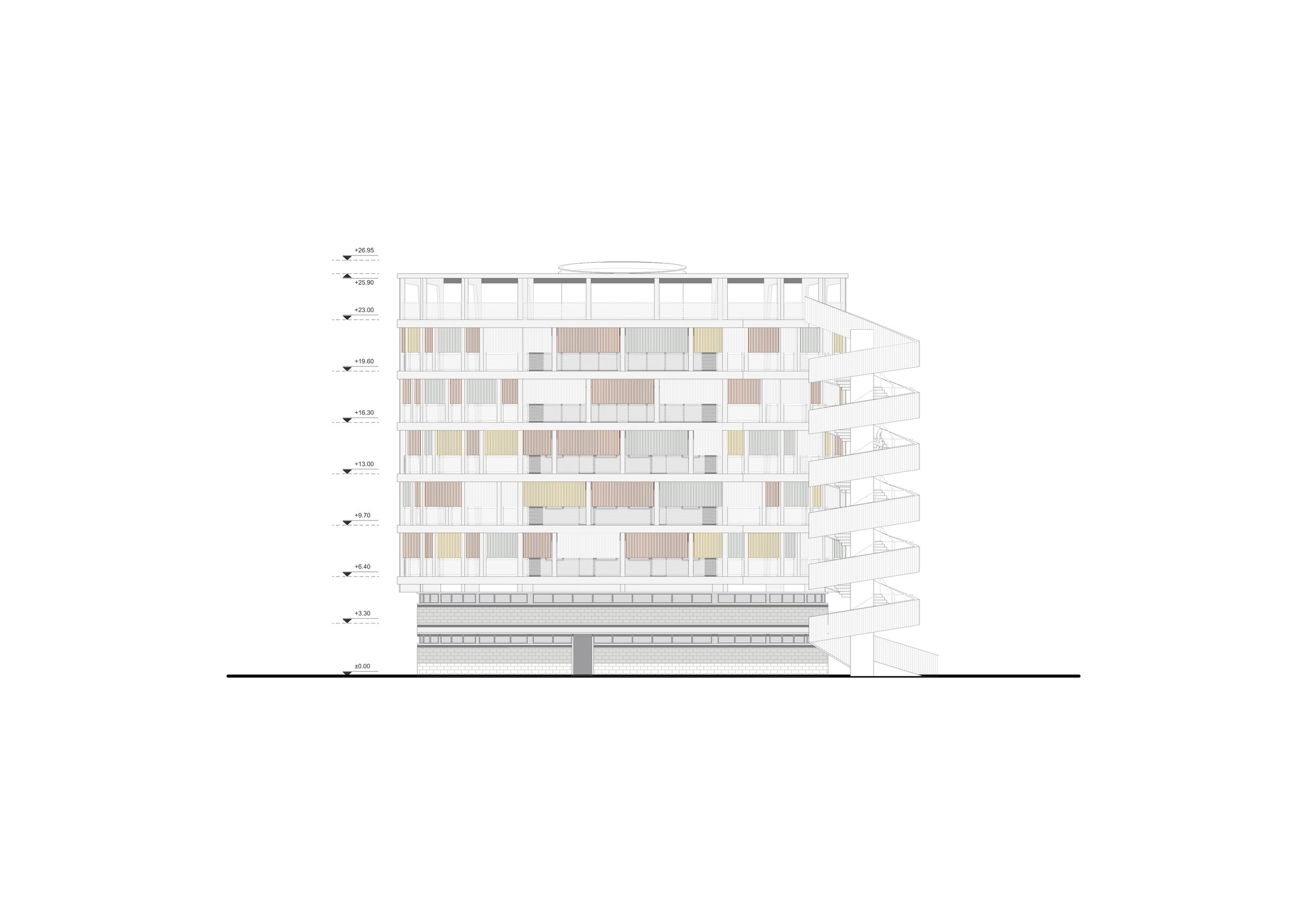
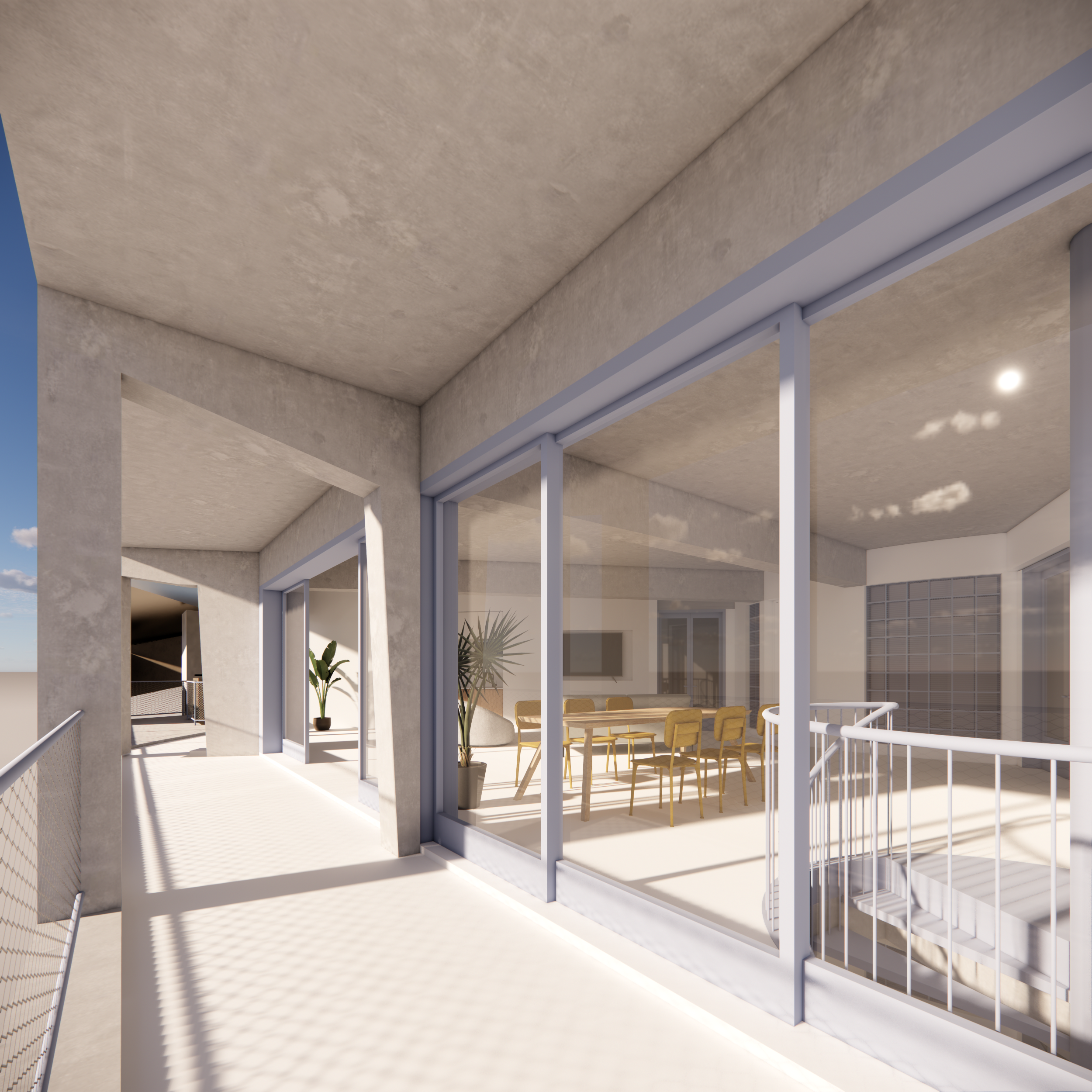
Between the 1st and 5th floors, a void is introduced in the ring of rooms, bringing additional light into the internal corridor and improving fire safety by connecting the corridor to an external open stair. Its dimensions (matching those of a typical room unit) allow it to function as a social gathering space.
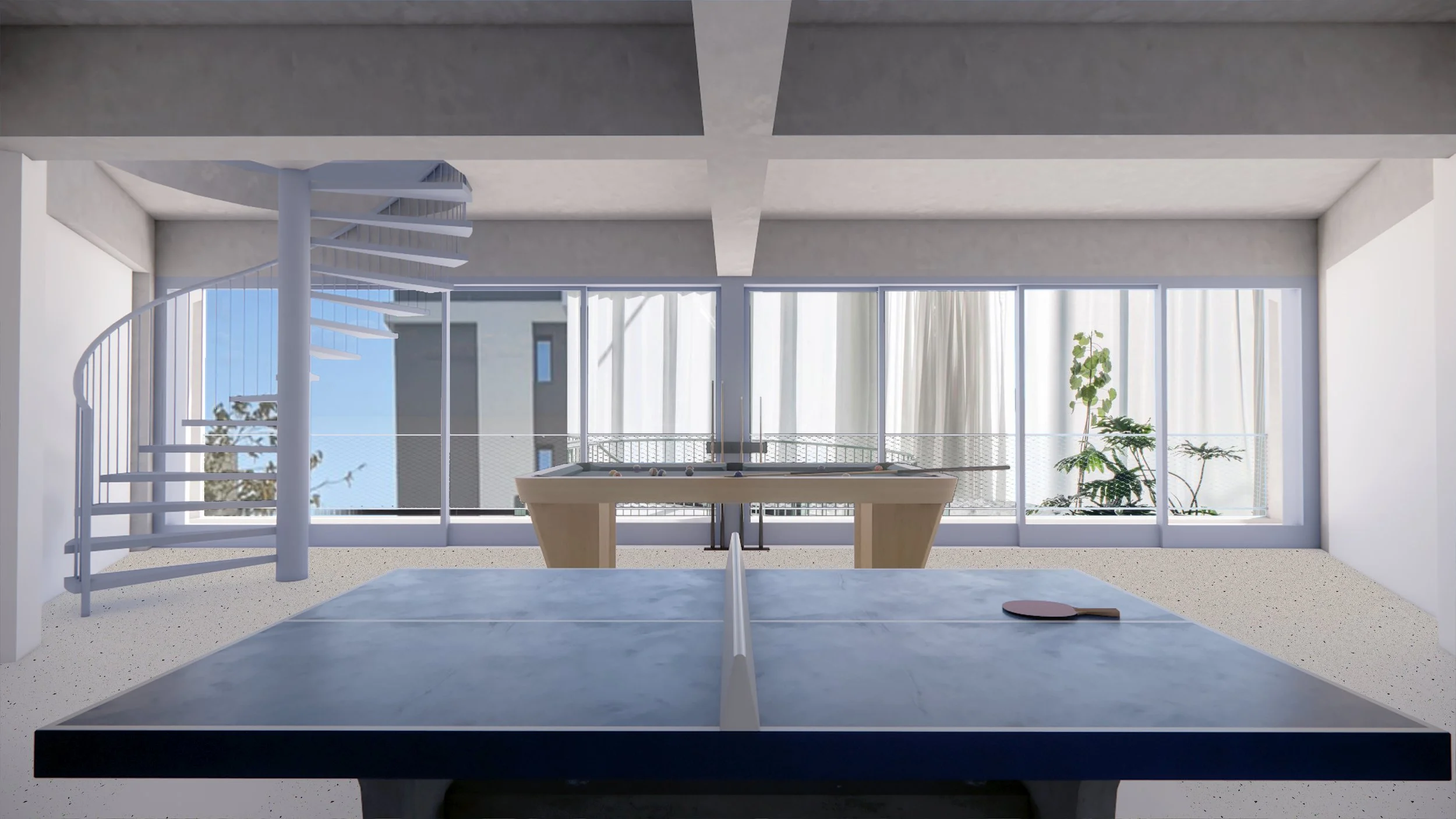
For the same reasons, the top two floors host shared common spaces—living rooms, dining areas, kitchens and a games room—designed as catalysts for social interaction among residents.
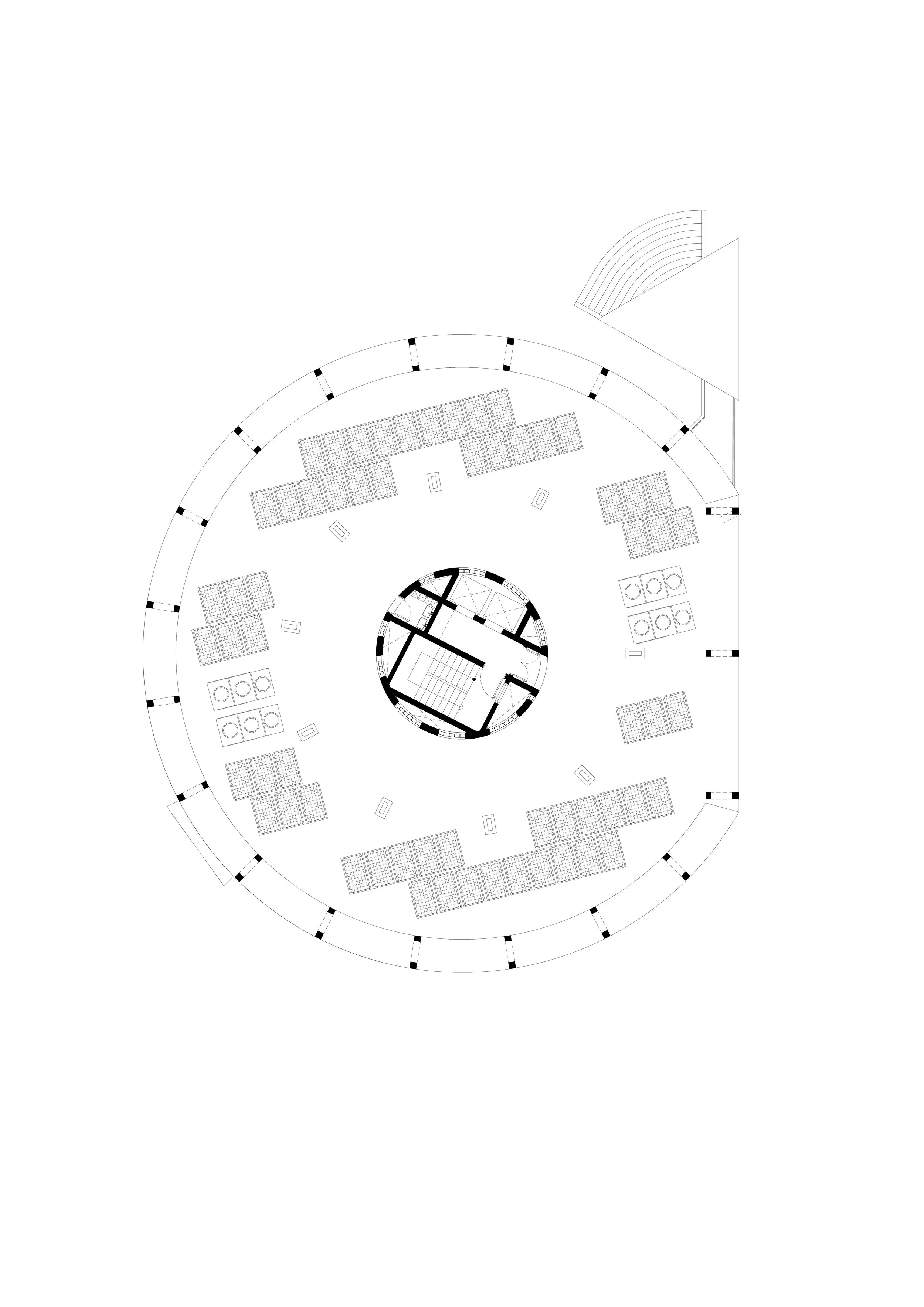
The roof is accessed from the central staircase and accommodates all required MEP installations for heating, cooling, etc. The stair core headroom is enclosed with extensive glazing to act as a light source for the central core. To release hot air accumulated within the core, it is designed to operate as a solar chimney, in combination with the external doors leading to the open staircase.
Bioclimatic Strategy – Passive & Active Systems
The building’s central core supports the passive ventilation strategy and accommodates the solar thermal system for Domestic Hot Water (DHW). It also allows natural diffuse light to enter circulation and shared spaces, improving indoor environmental quality.
Solar thermal collectors on the south-facing roof provide free DHW. Water is stored in an insulated cylinder in the MEP area, ensuring energy efficiency and reduced operating costs.
Dark, matte surfaces enhance solar absorption, increasing the solar chimney’s internal temperature. This creates stack effect ventilation, maximising natural airflow, improving energy performance and the building’s micro-climate.
The insulated vertical air duct incorporates fixed louvres or flow regulators, ensuring continuous natural ventilation. Insulation prevents thermal fluctuations from affecting airflow, enhancing system performance and indoor environmental stability.
Thermal breaks at balconies, combined with sandwich-type thermal insulation in external walls, ensure continuity of the thermal envelope, reducing thermal bridges and decreasing heating demands during winter.
Fresh air enters through external air inlets and is distributed via low-level internal ducts, which can be manually adjusted by users, improving comfort and indoor air quality in an energy-efficient manner.
Balcony recesses, lowered beams, careful window-to-wall ratios in the bedrooms and the adaptable fabric awnings significantly reduce cooling loads.
“PENTAROUND expresses the architectural idea as a spatial composition.The circular structure becomes a living pentagram—where repetition, rhythm and geometry create a harmonic framework for student life. The building is conceived as a precise composition of concentric systems, a balance of order and expression.”
Architectural Design: NoDāta Architecture – Christos Gourdoukis & Xenia Papastergiou
Design Team: Christos Gourdoukis, Xenia Papastergiou, Maria Mprikou, Anuja Joshi
Sustainability Consultant: George Koroneos
Mechanical Engineer: Ioannis Skiadas
Date: 2025
Location: Limassol, Cyprus